
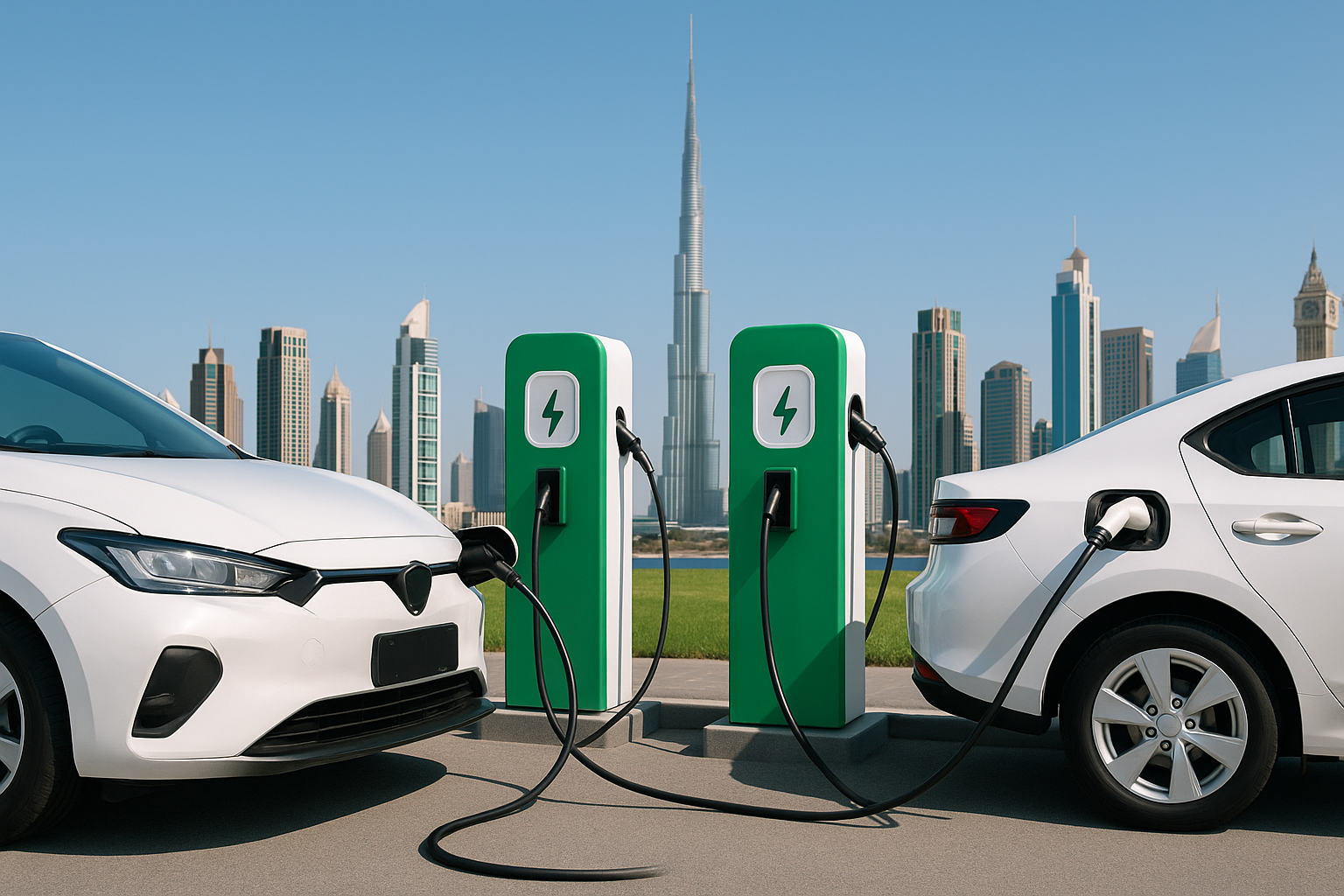
🚘 Introduction
The United Arab Emirates (UAE) has long been known for its love of luxury vehicles and innovative technology. In 2025, these passions converge with sustainability, giving rise to an electrifying revolution: Electric Cars and Charging Stations. With the UAE’s commitment to the Net Zero by 2050 initiative and investments in smart mobility, the electric vehicle (EV) landscape is expanding faster than ever before.
This guide will walk you through everything you need to know about Electric Cars and Charging Stations in the UAE—from popular car models and infrastructure to government policies and incentives. Whether you’re a resident considering your first EV or a visitor curious about charging options, this article has you covered.
1️⃣ 🔌 The Rise of Electric Cars in the UAE
Over the last few years, the UAE has seen exponential growth in the adoption of electric cars. This surge can be attributed to:
- Government-led sustainability goals
- Cost savings on fuel and maintenance
- Improved range and affordability of EVs
- Expanding network of Electric Cars and Charging Stations
As of 2025, electric cars make up around 10–12% of total vehicle sales in the UAE—a number that’s expected to rise significantly.
2️⃣ 🚙 Most Popular Electric Cars in 2025
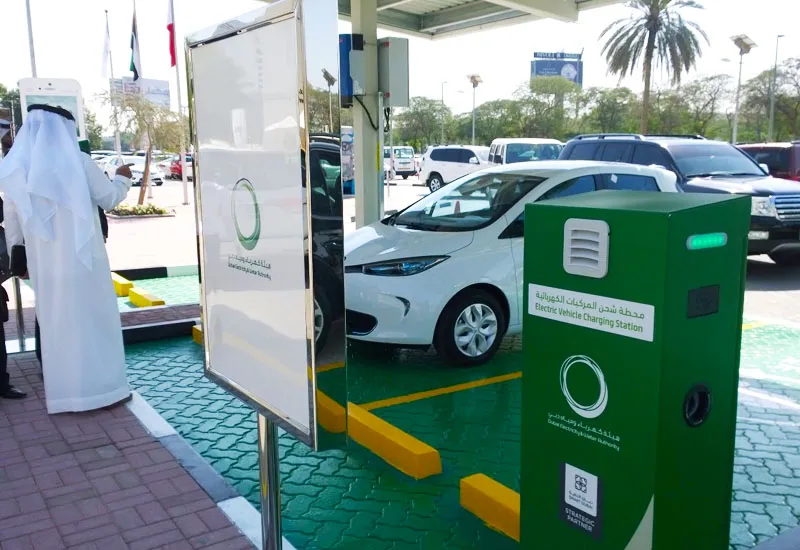
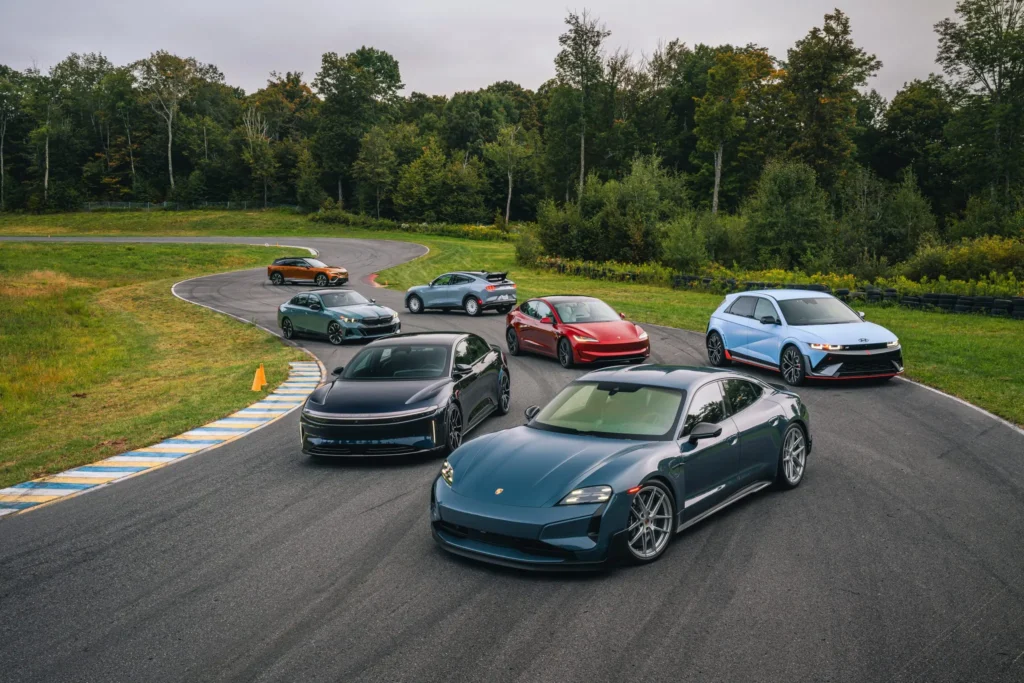
UAE consumers are gravitating toward both luxury and budget-friendly EV models. Here are some top picks:
- Tesla Model 3 & Y
- BYD Seal
- Nissan Leaf
- BMW iX and i4
- Lucid Air
- Hyundai Ioniq 6
- Volkswagen ID.4
These vehicles are chosen not just for performance but also for compatibility with the UAE’s expanding Electric Cars and Charging Stations infrastructure.
3️⃣ ⚙️ How Charging Stations Work in the UAE
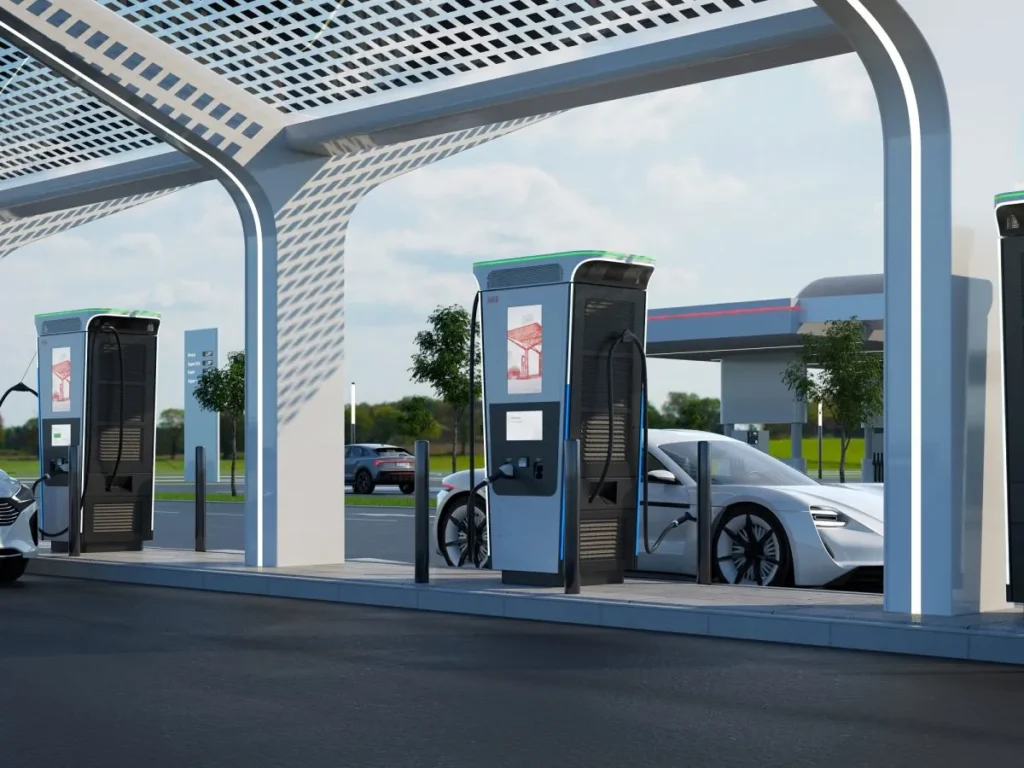
Electric Cars and Charging Stations work hand in hand to offer a seamless experience. There are three main types of chargers:
- Level 1 (Slow): Used mostly at home; 8–10 hours to fully charge
- Level 2 (Fast): Found in malls, offices, residential towers; 4–6 hours
- DC Fast Chargers: Highways and petrol stations; 30–45 minutes
Charging is often managed via mobile apps linked to specific networks like DEWA, ADNOC, or private providers.
4️⃣ 🏙️ EV Infrastructure in Dubai, Abu Dhabi, and Beyond
The UAE boasts a robust and rapidly growing charging network:
- Dubai: Over 700 DEWA Green Chargers installed
- Abu Dhabi: Initiatives from EWEC and Masdar City
- Sharjah, Ajman, and RAK: Gradual rollout of public Electric Cars and Charging Stations
Most new developments are required to include EV charging facilities in their design.
5️⃣ 🎁 Government Incentives and Support in 2025
The UAE government offers several benefits to promote Electric Cars and Charging Stations:
- Free parking for EVs in Dubai
- Exemption from Salik toll fees (pilot program)
- Zero customs duty on imported electric vehicles
- Green loans from select banks for EV purchase
These policies make transitioning to electric cars more appealing for residents and businesses.
6️⃣ 🏡 Home Charging Stations: Installation and Costs
Many EV owners in the UAE choose to install a home charging unit. Key details:
- Cost: AED 3,500–7,000 depending on brand and features
- Installation time: 1–2 days with approvals
- Brands: Tesla Wall Connector, ABB, Schneider, Siemens
Using home units ensures convenient and cost-effective use of Electric Cars and Charging Stations.
7️⃣ 📱 EV Charging Apps You Need in the UAE
To make the most of Electric Cars and Charging Stations, download these essential apps:
- DEWA EV Green Charger
- PlugShare
- Tesla App
- ChargeMap
- EVBox
These tools allow users to locate chargers, monitor availability, and make payments.
8️⃣ 🌍 Sustainability and Environmental Benefits
Switching to electric cars helps reduce carbon emissions and air pollution. The UAE aims to:
- Cut transport emissions by 40% by 2030
- Reduce oil dependence in urban mobility
- Promote green tourism with eco-friendly transportation
Electric Cars and Charging Stations play a major role in achieving these sustainability goals.
9️⃣ 🏎️ Performance and Driving Range in 2025
Today’s EVs offer high performance and long ranges:
- Average range: 350–500 km per charge
- High-end models: 600–800 km (e.g., Lucid Air, Tesla Model S Plaid)
- Acceleration: 0–100 km/h in 3–5 seconds
The efficiency of Electric Cars and Charging Stations means fewer stops and more reliability.
🔟 💼 EVs for Commercial Use and Ride-Hailing
Fleet electrification is another key trend:
- Careem and Uber are introducing electric vehicles into their fleets
- Delivery companies are adopting e-bikes and electric vans
- Taxis in Dubai and Abu Dhabi are increasingly electric
Electric Cars and Charging Stations are supporting this transition at the commercial level.
1️⃣1️⃣ 🛣️ Long-Distance Travel and Charging Highways
Planning a road trip? No problem. The UAE is building high-speed EV corridors:
- Charging hubs along Sheikh Zayed Road
- Highway stations between Dubai, Abu Dhabi, and Sharjah
- Battery swap stations in pilot phase
Long drives are now fully supported by Electric Cars and Charging Stations.
1️⃣2️⃣ 🧾 Cost Comparison: Electric vs. Fuel Vehicles
Though EVs have a higher upfront cost, savings quickly add up:
- Charging cost: AED 10–25 per full charge vs. AED 120+ for petrol
- Maintenance: Fewer moving parts mean lower costs
- Registration & insurance: Often discounted for EVs
Electric Cars and Charging Stations offer economic benefits over time.
1️⃣3️⃣ 🧠 Myths About Electric Vehicles in the UAE
Despite growing popularity, myths persist:
- “EVs can’t handle the heat”: Modern batteries are heat-resistant
- “There aren’t enough chargers”: Over 1,500 chargers are now active
- “EVs are slow.” Many are faster than petrol cars
Understanding the reality of Electric Cars and Charging Stations helps build trust.
1️⃣4️⃣ 📚 Training & Careers in EV Technology
The EV boom is creating jobs in:
- Charging station installation & maintenance
- Battery recycling and management
- Automotive software and diagnostics
Universities and technical institutes now offer certifications in Electric Cars and Charging Stations technology.
1️⃣5️⃣ 🚀 The Future of EVs in the UAE
The road ahead is electric. Trends to watch include:
- Autonomous EVs: Self-driving trials are already underway
- Smart charging stations: With AI-driven power optimization
- Integration with solar power: Especially in off-grid areas
The future of Electric Cars and Charging Stations in the UAE is bright and full of innovation.
🏁 Conclusion
The UAE is charging into the future with ambition and clarity. In 2025, Electric Cars and Charging Stations will no longer be a futuristic concept—they will be part of daily life. Whether you’re in Dubai, Abu Dhabi, or any emirate, going electric is easier, smarter, and more sustainable than ever before.
With strong infrastructure, supportive policies, and a wide range of EV choices, the UAE is setting a regional standard for clean mobility. By embracing Electric Cars and Charging Stations, individuals and businesses alike can contribute to a greener, smarter future.
So if you’re still on the fence, now is the time to plug in, power up, and drive forward with confidence. The era of Electric Cars and Charging Stations is here to stay—and it’s just getting started.
🌐 External Links
- Dubai Electricity and Water Authority (DEWA) Green Charger
- Ministry of Energy and Infrastructure UAE
- Tesla UAE
- Abu Dhabi Sustainable Transport Projects
- PlugShare UAE Charging Map
Also Read: Dubai’s Bold Leap into Driverless Cars: A Game-Changer Coming in 2026

One thought on “Electric Cars and Charging Stations in the UAE: Your Exciting 2025 Guide to a Greener Future”