1️⃣ Introduction
Dubai continues to lead the world in smart mobility solutions. The traffic signal system in Dubai has evolved from fixed-timer signals into a next-generation AI-powered network.
In early 2025, the Roads and Transport Authority (RTA) announced the launch of the UTC-UX Fusion platform, a system that blends artificial intelligence, predictive analytics, and digital twin technology to make traffic smoother, greener, and safer.
For drivers, this means one thing: green lights appear faster, congestion reduces, and journeys become more predictable.
2️⃣ What the New AI Platform Does
The upgraded traffic signal system in Dubai doesn’t rely on rigid cycles anymore. Instead, it:
- Monitors real-time traffic flow.
- Adapts green-light durations dynamically.
- Coordinates across multiple intersections.
- Prioritizes buses, trams, and emergency vehicles.
With AI and digital twin integration, Dubai’s signals now “think ahead,” allocating green phases where they’re most needed.
3️⃣ How AI Shortens Red-Light Waits
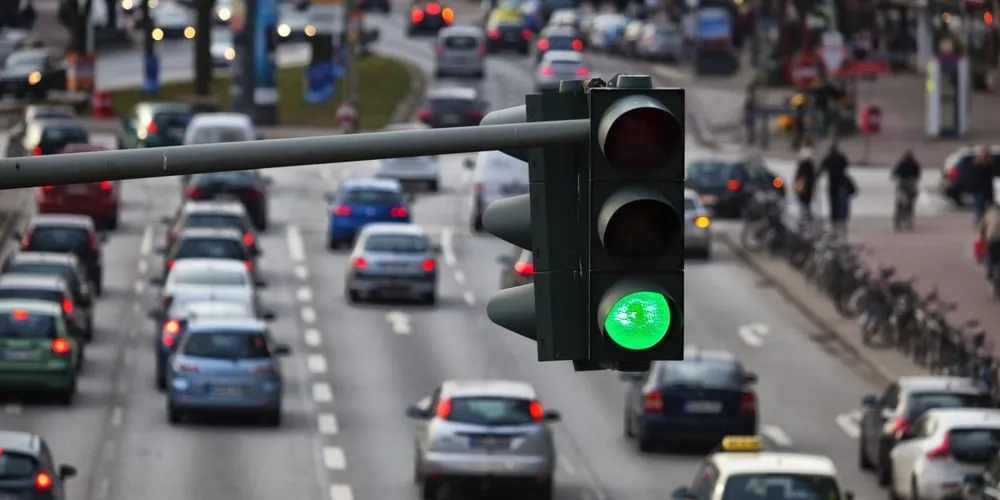
One of the biggest frustrations for drivers is waiting at a red light with no cars passing on the other side. AI solves this problem by:
- Predicting traffic flow based on historical and live data.
- Adjusting signal timings in real time.
- Reducing unnecessary red-light waits during off-peak times.
The traffic signal system in Dubai has shown early success in pilot corridors, where travel times improved, and drivers noticed the green light appearing faster, especially during rush hours.
4️⃣ Digital Twins & Predictive Control
A digital twin is a virtual simulation of the road network. The RTA uses it to test strategies before applying them to live traffic.
Benefits of this approach in the traffic signal system in Dubai include:
- Testing congestion scenarios before they happen.
- Simulating responses to events like accidents, parades, or football matches.
- Coordinating green phases across corridors to reduce stop-and-go driving.
This predictive layer ensures that drivers see longer green waves during busy times.
5️⃣ Prioritizing Public Transport & Emergency Vehicles
Dubai’s smart city vision strongly supports public transport and emergency response.
The new traffic signal system in Dubai allows:
🚍 Buses & Trams: Priority signals keep them on schedule.
🚑 Ambulances & Fire Trucks: Emergency vehicles get fast-tracked greens.
🚶 Pedestrians: AI ensures safe crossings without causing major delays.
This makes the entire mobility ecosystem more efficient and inclusive.
6️⃣ Coordinated Corridors, Green Waves & V2X
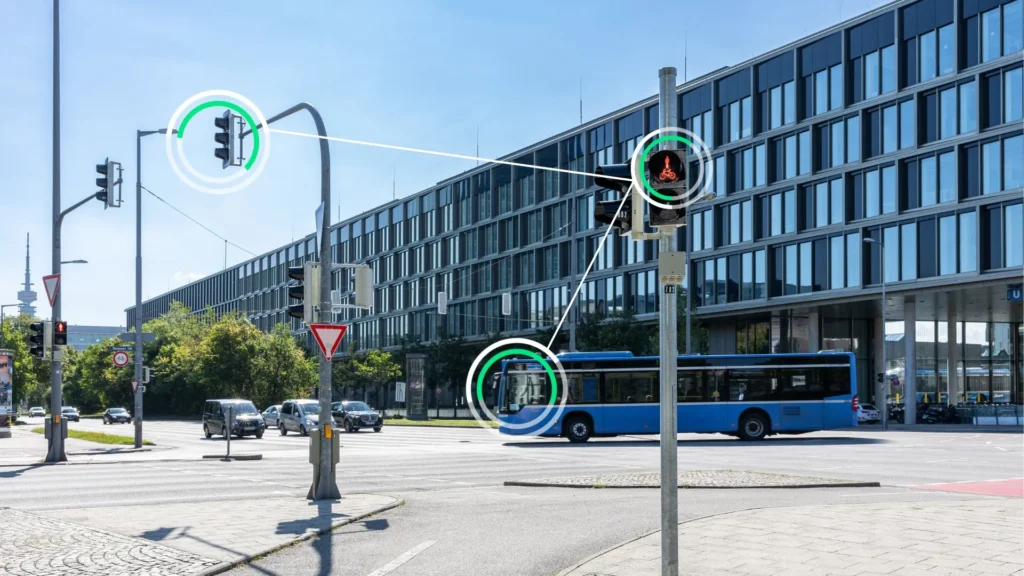
One of the most exciting upgrades is the creation of green waves — synchronized signals along major corridors.
Here’s how it works:
- Intersections communicate with each other.
- Cars driving at steady speeds can pass multiple green lights in a row.
- Integration with V2X (vehicle-to-everything) technology allows connected cars to receive signal timing updates directly.
This coordination reduces stop-start traffic and cuts emissions. The traffic signal system in Dubai is also being tested with navigation apps, allowing drivers to adjust speeds to “catch the green.”
7️⃣ Data, Privacy & System Resilience
The traffic signal system in Dubai uses:
- AI-powered CCTV and loop detectors.
- Cloud-based big data analytics.
- Edge computing for faster processing.
But what about privacy and resilience?
✅ Data is anonymized.
✅ Systems have backup safety modes.
✅ Human operators supervise AI recommendations.
Even during outages, the traffic signal system in Dubai switches to safe fixed-time plans, preventing gridlock.
8️⃣ What Drivers Can Do to Get More Green Lights
While AI plays the biggest role, drivers themselves can help the system perform better:
✔️ Maintain steady speeds (don’t rush to the light).
✔️ Avoid blocking intersections (sensors must detect lanes correctly).
✔️ Use RTA apps for route guidance.
✔️ Give way to buses and emergency vehicles.
The smoother the drivers behave, the more efficiently the traffic signal system in Dubai can allocate greens.
9️⃣ Measured Benefits & Rollout Timeline
Early studies show:
📉 10–20% reduction in delays at busy intersections.
🚦 Smoother corridor travel with more green waves.
🌍 Reduced emissions and fuel consumption.
The RTA plans to expand the traffic signal system in Dubai across major junctions by 2026, gradually covering the entire city.
For drivers, this means:
- Faster commutes.
- Fewer unnecessary stops.
- A cleaner, greener transport system.
🔟 Challenges & Future-Proofing
No innovation is without challenges. For the traffic signal system in Dubai, the key hurdles include:
- Upgrading old infrastructure.
- Ensuring accurate data collection.
- Balancing the needs of cars, buses, cyclists, and pedestrians.
But Dubai is future-proofing:
- APIs allow future integration with autonomous cars.
- AI learning improves over time.
- Smart mobility strategies ensure scalability.
1️⃣1️⃣ Sustainability & Urban Benefits
The system’s long-term benefits go beyond faster greens:
🌱 Lower carbon emissions.
🚛 Improved freight delivery times.
🚑 Faster emergency response.
🏙️ Better quality of urban life.
The traffic signal system in Dubai aligns with the UAE’s Net Zero 2050 vision, showing how AI-driven transport can contribute to sustainability.
1️⃣2️⃣ Quick Tips: How to “Catch the Green”
Here’s a quick checklist for drivers who want to maximize the AI’s efficiency:
- 🚘 Maintain a steady speed.
- 📲 Use official RTA navigation apps.
- ⛔ Don’t block junctions.
- 🚌 Respect bus and emergency lanes.
Following these rules makes the traffic signal system in Dubai more effective for everyone.
🏁 Conclusion
The traffic signal system in Dubai is no longer a simple traffic timer — it’s an AI-driven, predictive, adaptive network.
With UTC-UX Fusion, digital twins, and real-time learning, Dubai drivers can look forward to:
- Shorter red-light waits.
- More green waves.
- Safer, smoother journeys.
As the rollout continues in 2025–2026, the traffic signal system in Dubai will play a key role in shaping a smarter, greener, and more efficient city.
🌐 External Links & References
- RTA Official Announcement
- Dubai Media Office – AI Traffic Signal Rollout
- Gulf News Report on Traffic AI
- Adaptive Traffic Control Research
Also Read: Here’s how AI is revolutionizing elderly care in Sharjah in 2025 — The Ultimate Guide