

Introduction
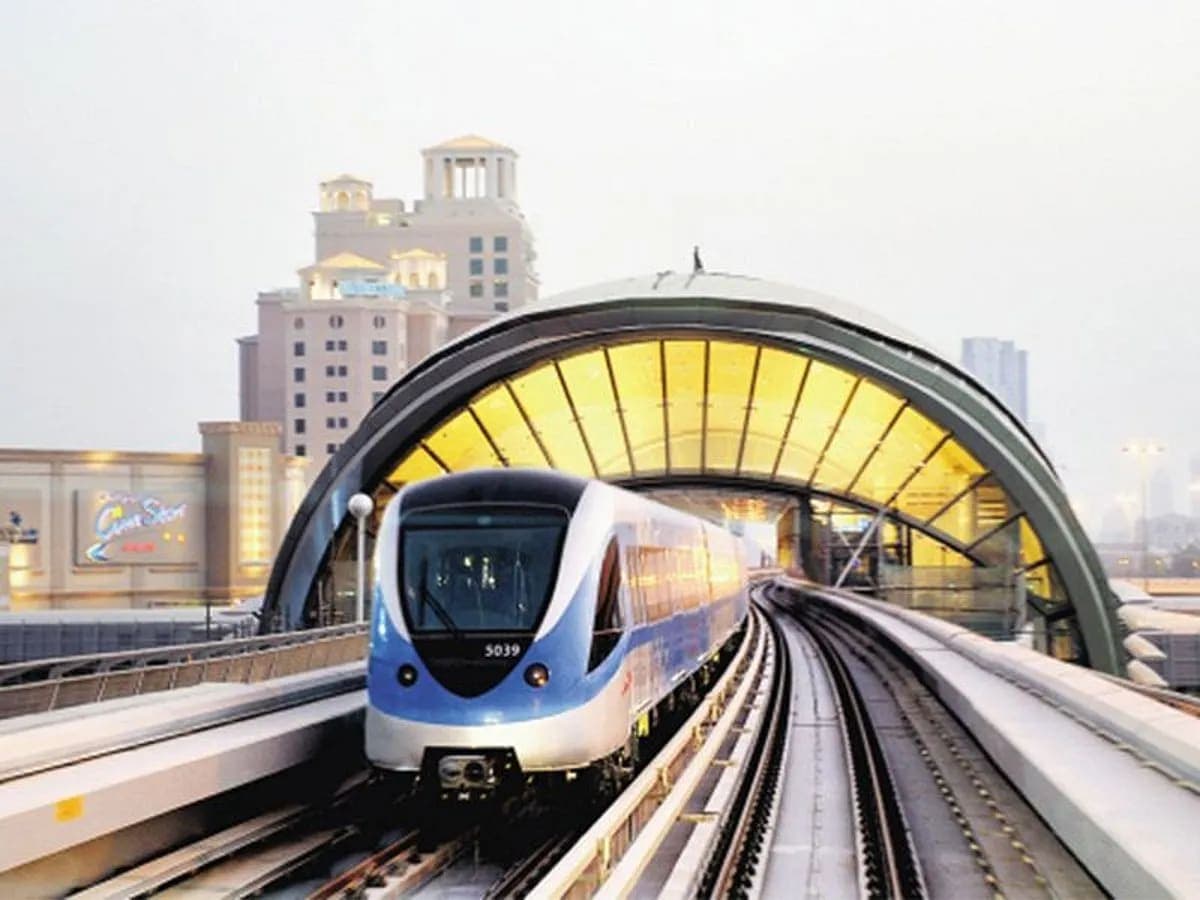
The Dubai Metro is not just a mode of transportation; it is a symbol of Dubai’s modernization and its commitment to sustainable mobility. Since its launch in 2009, the metro has carried billions of passengers, linking iconic landmarks like the Burj Khalifa, Dubai Marina, and Dubai International Airport. In 2025, the Dubai Metro remains the backbone of the city’s public transport system, offering a clean, safe, and cost-effective way to navigate one of the world’s busiest and fastest-growing cities.
Whether you’re a tourist trying to catch the best view of Dubai’s skyline, a student heading to class, or a professional commuting daily, this ultimate Dubai Metro guide will give you everything you need — from routes and fares to tips and upcoming expansions.
1️⃣ 🚉 What Makes the Dubai Metro Special?
The Dubai Metro is a fully automated, driverless railway system that sets global standards. It’s consistently ranked among the world’s most modern metro networks. Here’s why:
- Driverless technology: Fully automated trains with cutting-edge safety systems.
- Clean and eco-friendly: The Dubai Metro helps reduce road congestion and carbon emissions.
- Strategic connectivity: Links residential, commercial, and leisure hubs across Dubai.
- Affordable and efficient: Fares are budget-friendly compared to taxis or ride-hailing services.
- Tourist-friendly: Stations are located near top attractions, making sightseeing cheaper and easier.
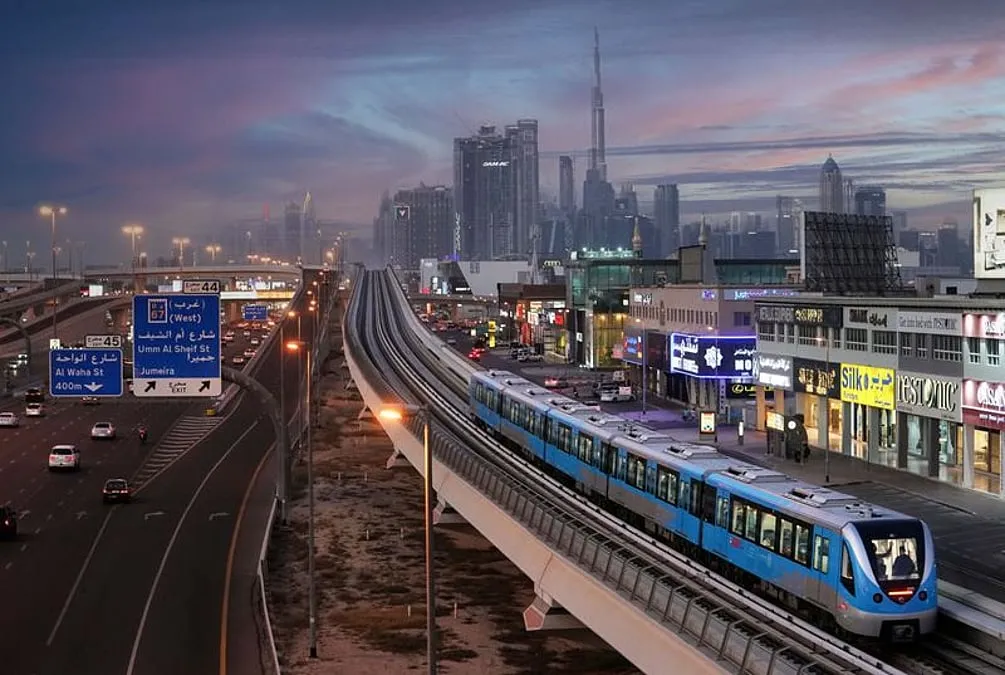
For many residents, the Dubai Metro is the most reliable way to commute daily. For visitors, it’s an attraction in itself — offering scenic elevated tracks with panoramic views of Dubai’s skyline.
2️⃣ 🗺️ Dubai Metro Lines and Key Stations
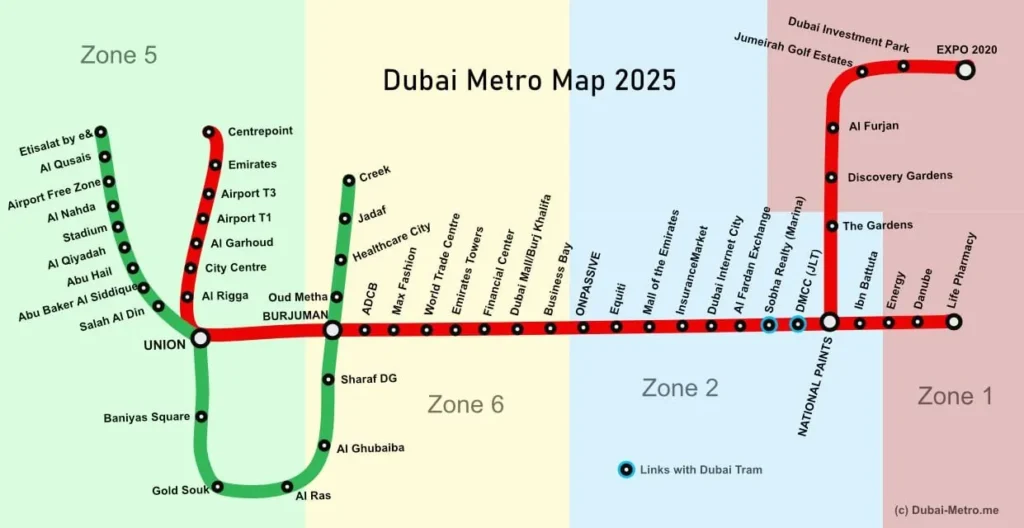
The Dubai Metro currently has two main lines with one major extension:
- Red Line: The longest line, running along Sheikh Zayed Road. It connects major business and leisure hubs, including Dubai International Airport (Terminals 1 & 3), Burj Khalifa/Dubai Mall, Dubai Internet City, Mall of the Emirates, Dubai Marina, and Jebel Ali.
- Green Line: Serves historic districts around Dubai Creek. Popular stops include Al Fahidi, Union Square, Al Ras (near the Gold Souk), and Dubai Healthcare City.
- Route 2020 Extension: Extends the Red Line to the Expo 2020/District 2020 area, a growing hub for business, innovation, and exhibitions.
👉 Pro Tip: Download the official Dubai Metro map from the RTA website or keep a printed copy for quick reference.
3️⃣ 💳 Understanding NOL Cards and Fares
To travel on the Dubai Metro, you’ll need a NOL card — a rechargeable smart card accepted across all public transport in Dubai (metro, tram, bus, and even some taxis).
Types of NOL Cards:
- Red Ticket: For tourists and occasional riders (valid for up to 10 single journeys).
- Silver Card: Most popular option for residents; affordable and valid for metro, bus, and tram.
- Gold Card: Offers access to the exclusive Gold Class cabins with leather seating.
- Blue Card: Personalized, with balance protection and long-term travel passes.
Fare Zones
Dubai is divided into fare zones. The more zones you cross, the higher the fare.
- One zone: Lowest cost.
- Two zones: Medium cost.
- Three or more zones: Highest cost.
👉 Money-Saving Tip: If you’re a daily commuter, consider a monthly pass on your NOL card. It drastically reduces travel costs if you use the Dubai Metro regularly.
4️⃣ ⏱️ Timings and Frequency
The Dubai Metro is designed for convenience:
- Weekdays (Mon–Thu): ~5:00 AM until midnight.
- Fridays: Opens later (around 10:00 AM) but runs late into the night.
- Saturdays: Extended timings during busy weekends.
- Public holidays & events: RTA often extends metro hours for big events like New Year’s Eve, National Day, or festivals.
Trains arrive every 2–4 minutes during peak hours and every 5–7 minutes off-peak. This high frequency ensures that even during rush hours, waiting time is minimal.
👉 Pro Tip: Avoid peak hours (7:00–9:00 AM and 5:00–7:00 PM) if you want a more comfortable ride.
5️⃣ ♿ Accessibility and Onboard Experience
The Dubai Metro is designed for everyone:
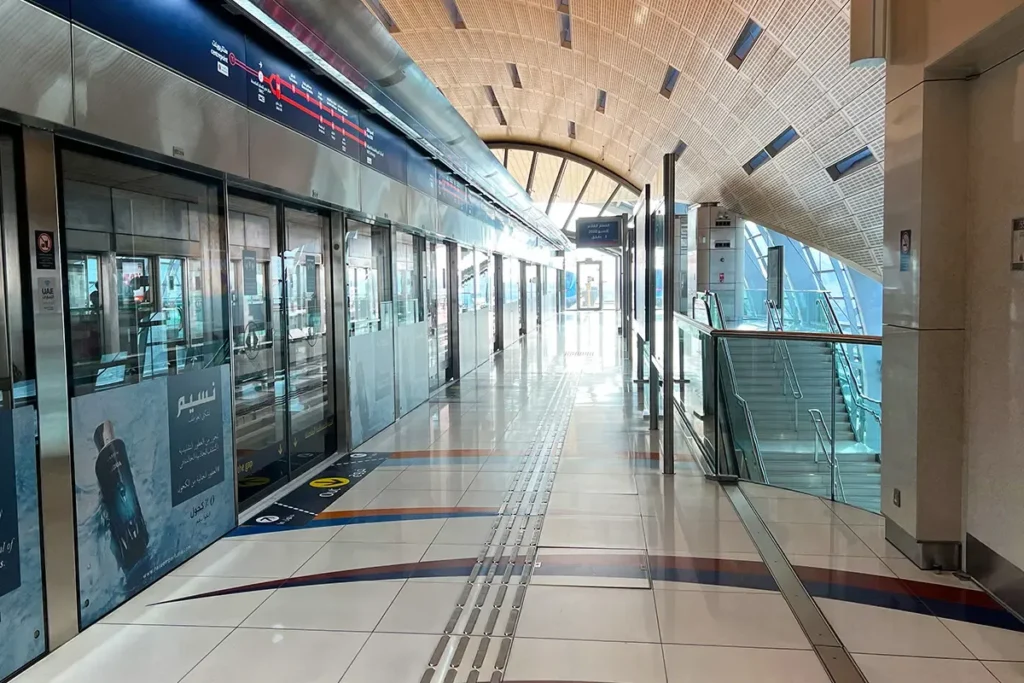
- Elevators and escalators at all stations.
- Braille signage and tactile flooring for visually impaired passengers.
- Dedicated cabins for women and children.
- Priority seating for seniors and passengers with disabilities.
Inside the trains, you’ll find air conditioning, free Wi-Fi (at some stations), and CCTV monitoring for safety. Gold Class cabins offer extra space and premium seating, while standard cabins are clean, modern, and efficient.
👉 Etiquette Reminder: Eating, drinking, or chewing gum on the Dubai Metro is strictly prohibited — fines apply!
6️⃣ 🧭 Trip Planning and Smart Commuting
To make the most of your Dubai Metro journey:
- Use the RTA app or Google Maps for real-time route planning.
- Plan transfers between the metro, tram, and buses for seamless travel.
- Carry a fully charged NOL card to avoid being stuck at gates.
- For tourists: Buy a day pass for unlimited rides — cheaper if you plan multiple trips.
👉 Example: Want to visit Dubai Mall? Simply take the Red Line to Burj Khalifa/Dubai Mall station. From there, an air-conditioned walkway leads you directly into the mall.
7️⃣ 🔒 Safety, Security, and Travel Tips
The Dubai Metro is one of the safest metro systems in the world:
- Every station has security officers, surveillance cameras, and emergency intercoms.
- Rules are enforced strictly — fines apply for eating, vandalism, or entering the wrong cabin.
- Train doors won’t open unless aligned with platform doors, ensuring maximum passenger safety.
👉 Insider Tip: If traveling during the Dubai Shopping Festival or other major events, arrive early at stations to avoid queues at ticket machines.
8️⃣ 🚧 Future Expansions and What’s Next
The future of the Dubai Metro looks exciting. Major plans include:
- Blue Line Project: Announced in 2024, this 30+ km expansion will connect International City, Silicon Oasis, and Dubai Creek Harbour to the metro system.
- More driverless upgrades: Integration with smart city initiatives.
- New stations: To be added in rapidly developing areas like Dubai Hills and Meydan.
By 2030, the Dubai Metro is expected to cover more than double its current reach, supporting Dubai’s vision of a greener, smarter city.
✅ Quick Checklist Before Riding the Dubai Metro
- Buy or recharge your NOL card.
- Check the zones to calculate your fare.
- Know the train timings (especially for airport trips).
- Follow cabin rules (Women/Children, Gold, or General).
- Plan transfers if your destination is off the metro route.
- Keep an eye on RTA announcements for service changes.
Conclusion
The Dubai Metro is more than just transport — it’s the lifeline of a city that thrives on speed, efficiency, and global connectivity. In 2025, with expansions on the horizon and millions of daily riders, it continues to set an example of urban mobility done right.
Whether you’re here for work, study, or leisure, mastering the Dubai Metro will save you time, money, and stress — while letting you explore Dubai in comfort. From historic Deira to futuristic District 2020, every journey on the metro is a step into the heart of the city.
External Links & Further Reading
- RTA Dubai – Metro Overview
- Dubai Metro Map – Official PDF
- Dubai Metro Fares & NOL Information
- Blue Line Expansion News – Reuters
- Dubai Metro Updates – Gulf News
Also Read: Business Golden Visa in the UAE — The Complete 2025 Guide