

✈️ 1. Introduction
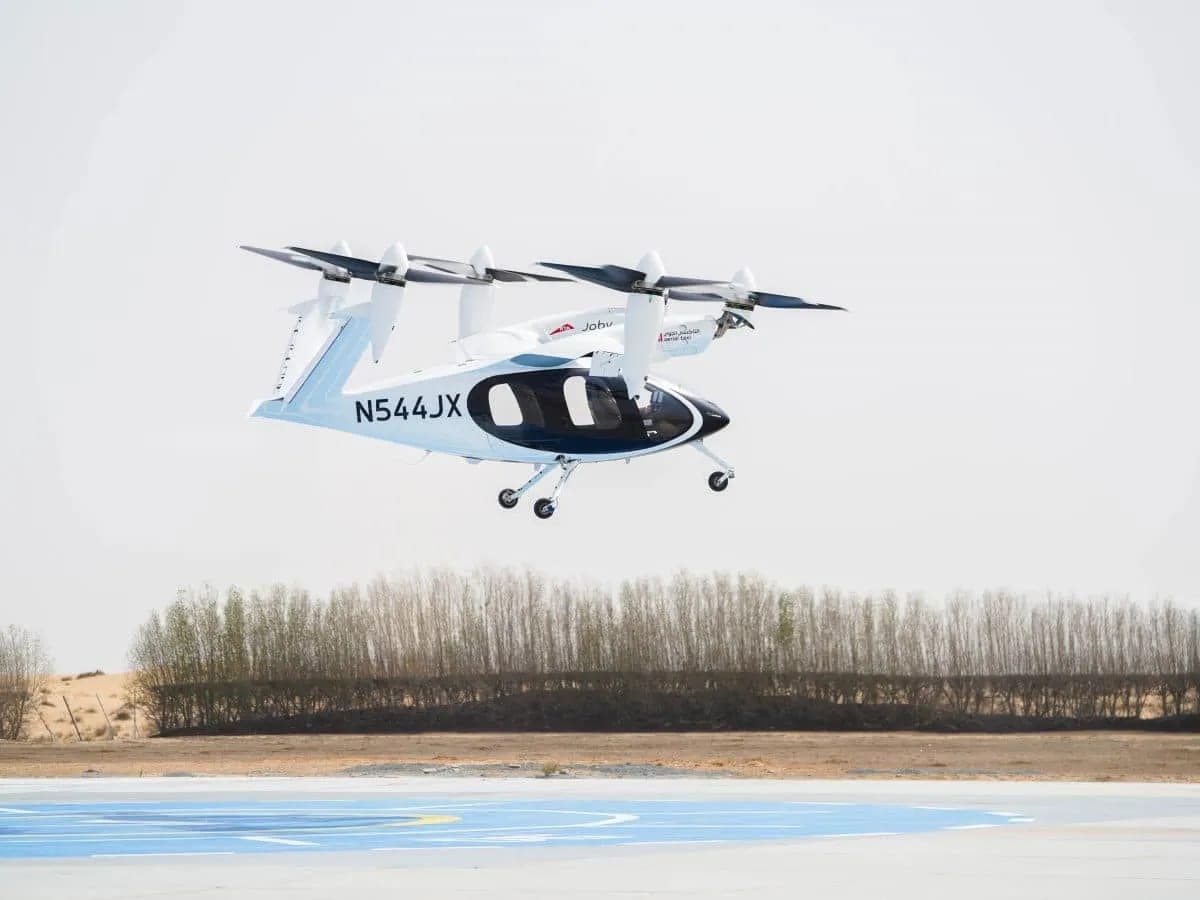
Dubai, known for its ambition and futuristic vision, has achieved yet another historic milestone by launching the first air taxi test flight. This monumental event marks the beginning of a new era in urban transportation, where electric air taxis are no longer a futuristic fantasy but a practical solution to the modern mobility crisis. Led by Joby Aviation, the flight took place in the heart of the desert, showcasing a successful vertical takeoff, wingborne cruise, and vertical landing, all executed flawlessly. With this, Dubai steps closer to realizing its goal of becoming a leader in sustainable, high-tech urban mobility. The first air taxi test flight is a symbol of the city’s innovation-driven approach and willingness to embrace cutting-edge technology.
The significance of this achievement goes beyond mere spectacle. It illustrates Dubai’s commitment to transforming its transport network by incorporating environmentally friendly, high-speed aerial solutions. As the city prepares for a 2026 commercial launch, this test flight serves as a foundation upon which the future of air mobility will be built. This comprehensive article explores every aspect of the first air taxi test flight, its players, technical specifics, strategic implications, and future outlook.
2. 🌍 Why It Matters
2.1 Revolutionizing Urban Transit
Urban areas worldwide struggle with traffic congestion and commuting inefficiencies. With the first air taxi test flight, Dubai introduces a transformative solution to these problems. The electric vertical takeoff and landing (eVTOL) aircraft demonstrated the potential to cut down travel time significantly. For example, a commute from Dubai International Airport (DXB) to Palm Jumeirah, which usually takes 45 minutes by car, could be completed in just 12 minutes via air taxi. This capability redefines convenience and productivity for both residents and tourists.
2.2 Environmental Benefits
In line with Dubai’s sustainability goals, the aircraft showcased during the first air taxi test flight is designed to be fully electric and produces zero emissions. Additionally, its low noise profile allows it to operate in residential zones without causing disturbances. These features are crucial for integrating air taxis into cityscapes without compromising environmental or social harmony.
2.3 Global Leadership in Innovation
The successful first air taxi test flight solidifies Dubai’s position as a global innovation hub. While many countries are still in early research stages, Dubai has taken a major leap by physically demonstrating air taxi feasibility. This advancement enhances the city’s international reputation and invites further foreign investment in smart city initiatives.
3. ✈️ About the Aircraft & Test Flight
3.1 Joby’s eVTOL Overview
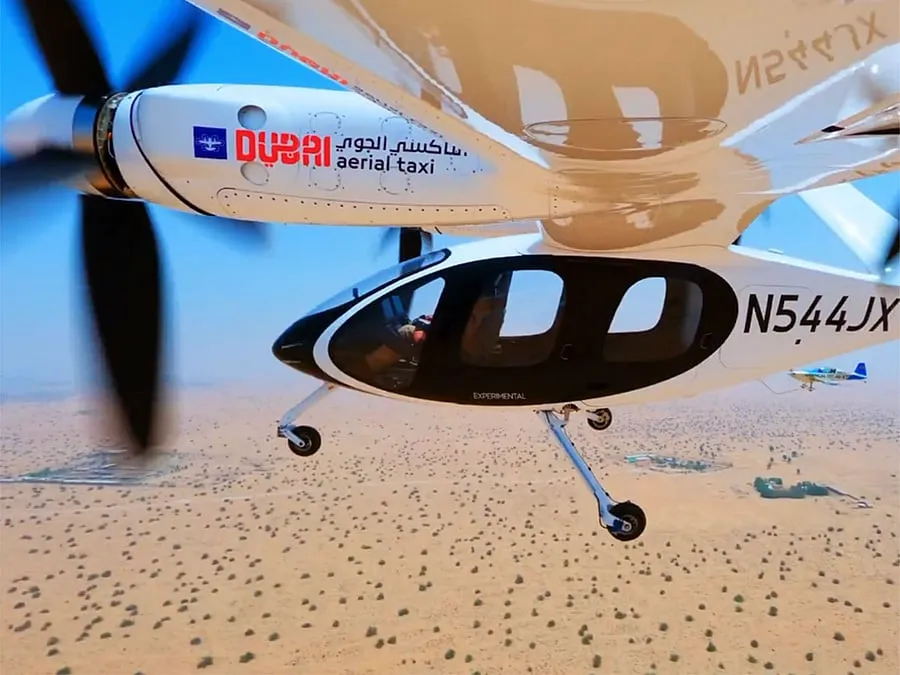
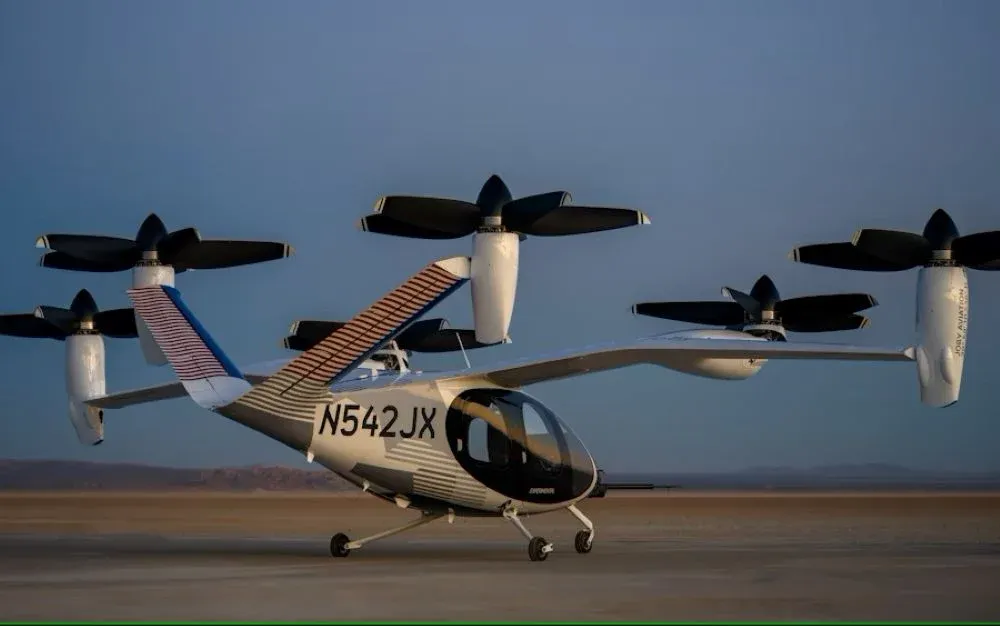
The eVTOL aircraft used in the first air taxi test flight was developed by Joby Aviation, a U.S.-based aerospace company known for its pioneering work in electric flight. The aircraft can accommodate one pilot and up to four passengers, making it ideal for urban transit. It features a range of approximately 160 km (100 miles) and a top speed of 320 km/h (200 mph), enabling fast intercity and intracity travel.
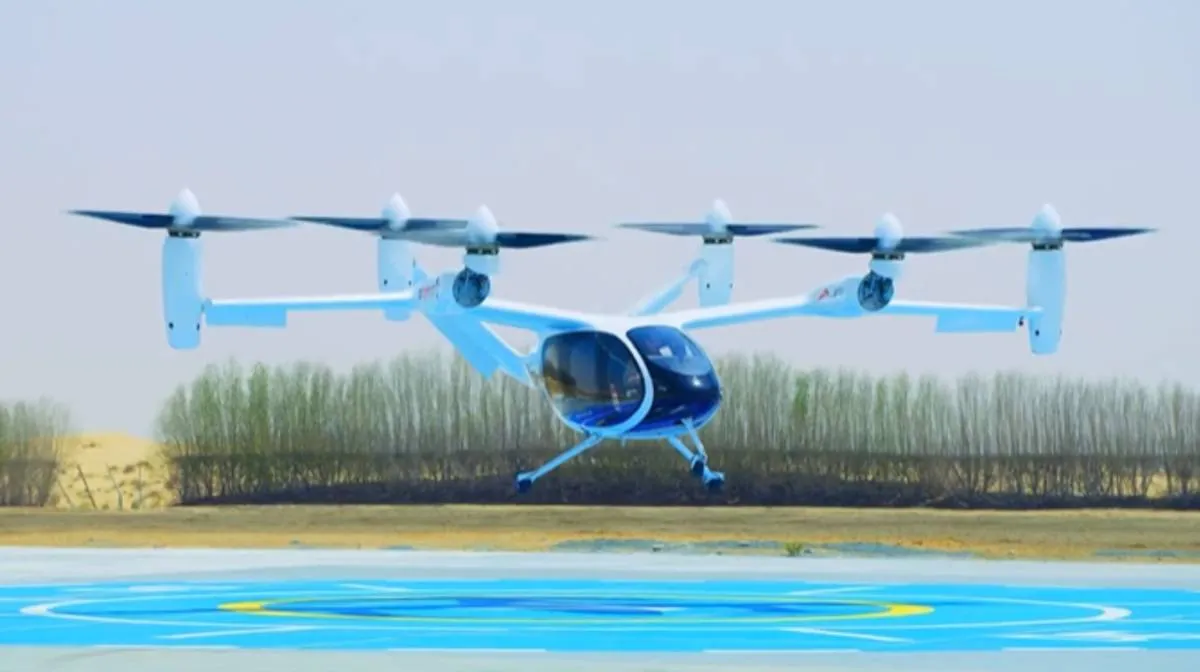
The aircraft’s architecture includes six rotors that tilt during flight, enabling vertical takeoff and smooth transition to horizontal cruising. Its battery-powered design ensures zero tailpipe emissions, while the compact structure allows it to operate from small vertiports, reducing the need for expansive infrastructure.
3.2 Flight Details
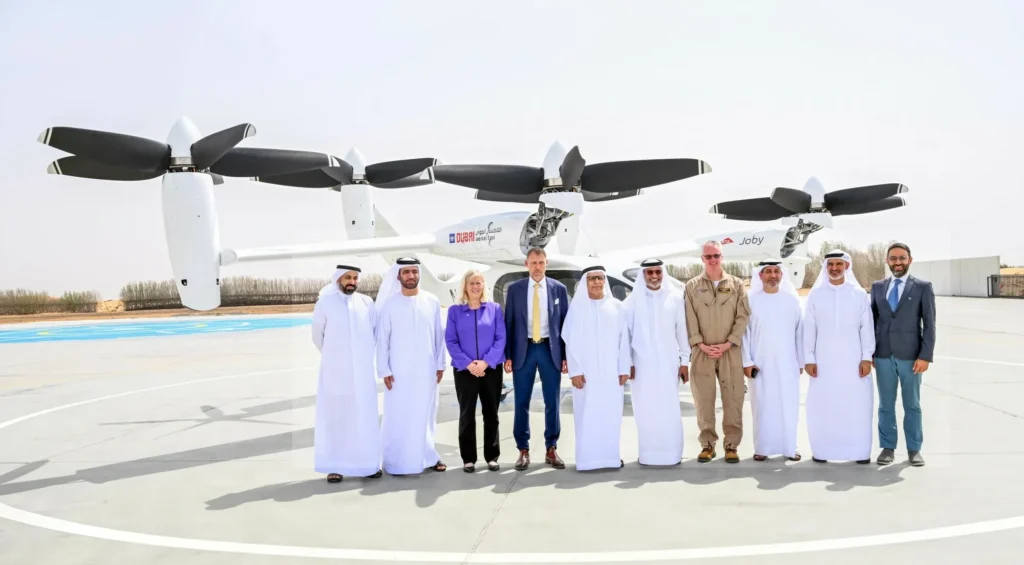
The first air taxi test flight occurred on June 30, 2025, in a specially designated desert test site near Dubai. The flight performed a complete mission profile: it lifted off vertically, transitioned to forward wingborne flight, hovered, and then landed vertically. Observers included high-ranking officials from the Dubai Roads & Transport Authority (RTA), Civil Aviation authorities, and representatives from Joby Aviation.
This milestone was not merely a technical display but a public demonstration of the operational feasibility and readiness for the upcoming 2026 commercial launch. It serves as a proof-of-concept that these vehicles can safely and efficiently operate in the unique climatic and urban environment of the UAE.
4. 🏩 Stakeholders & Participants
The success of the first air taxi test flight was made possible through the collaboration of several key players:
- Joby Aviation: As the developer and operator of the aircraft, Joby Aviation is responsible for the technology and flight operations. CEO JoeBen Bevirt, along with Dubai General Manager Anthony Khoury, was present at the event.
- Dubai Roads and Transport Authority (RTA): Tasked with urban transportation oversight, the RTA has played a crucial role in integrating air mobility into the city’s infrastructure.
- Dubai Civil Aviation Authority and UAE GCAA: These bodies ensure that flight operations comply with aviation safety standards.
- Crown Prince Sheikh Hamdan bin Mohammed: His presence at the test flight underscores the political will and strategic importance Dubai assigns to futuristic mobility.
Together, these stakeholders highlight the multilayered cooperation necessary to transition air taxis from concept to reality. The successful first air taxi test flight would not have been possible without this unified vision.
5. 🧹 Economic & Infrastructure Framework
5.1 Exclusive Rights & Timeline
In February 2024, the RTA granted Joby Aviation a six-year exclusive operating license, covering all commercial air taxi operations within Dubai. This exclusivity allows for stable infrastructure development, operations testing, and regulatory adaptation. The goal is to launch commercial services by 2026, starting with key urban nodes such as Dubai International Airport, Palm Jumeirah, Downtown Dubai, and Dubai Marina.
5.2 Vertiport Development
Vertiports will serve as takeoff and landing hubs for eVTOLs. The first such facility is under construction at DXB, designed with passenger lounges, maintenance bays, and electric charging stations. Collaborations with companies like Skyports and VPorts ensure that these vertiports will meet global standards while adapting to local conditions. Dubai plans a phased rollout of these hubs, ensuring strategic coverage and operational efficiency.
5.3 Regulatory & Certification Processes
The first air taxi test flight also initiates a rigorous certification process with both UAE and U.S. aviation authorities. Joby’s aircraft must receive type certification from the Federal Aviation Administration (FAA) and the UAE General Civil Aviation Authority. These certifications are crucial to ensuring safety and reliability for public operations.
6. 🌐 Strategic Vision & Future Plans
6.1 Phased Rollout
Dubai plans a three-phase deployment:
- Pilot flights for technology validation.
- Initial operations along pre-approved corridors.
- City-wide adoption with integration into public transport systems.
The first air taxi test flight marks the end of Phase 1 and the beginning of more immersive pilot operations set for mid-2025.
6.2 Integration with Public Transit
To maximize convenience, air taxis will integrate with the Dubai Metro, bus services, and bicycle-sharing systems. The RTA envisions a seamless multimodal journey, where passengers can switch from metro to air taxi with minimal friction. Payment systems will be unified under the Nol card ecosystem.
6.3 Infrastructure Expansion
By 2027, Dubai aims to have at least 10 operational vertiports and a fleet of 50+ air taxis. Plans are also in motion to connect Dubai with other emirates using high-speed air corridors, enabling rapid regional commutes. The first air taxi test flight is only the beginning of this transformative journey.
🆚 7. Global Comparison: Dubai vs. the World
Dubai’s first air taxi test flight positions it ahead of many global cities in the race toward airborne urban mobility.
- Germany: Volocopter flew an unmanned air taxi in 2017. However, Dubai’s test included a piloted flight—an advanced milestone.
- USA: Joby Aviation is testing in California, but no major city has completed a government-endorsed public test flight like Dubai.
- China: EHang is conducting autonomous flight trials but still lacks full regulatory clearance.
Dubai’s unique advantage is the strong governmental push and exclusive contracts that unify its air mobility rollout, which is unmatched globally.

📈 8. Market & Financial Perspective
8.1 Investor Confidence
Following the first air taxi test flight, Joby Aviation’s shares surged by over 25%, showcasing strong market confidence. This uplift reflects belief in the commercial viability of eVTOLs.
8.2 Government & Private Funding
The RTA, Dubai Future Foundation, and UAE investors are backing the project. Globally, over $2 billion in investment has poured into Joby Aviation, including from Toyota and Intel. Dubai’s infrastructure buildout is expected to cost $1.3 billion over 5 years.
8.3 Economic Impact
The air taxi ecosystem will create thousands of new jobs—pilots, ground crew, vertiport managers, engineers, and software developers. It will also boost tourism and high-end commuting, making Dubai even more attractive to expats and businesses.
✅ 9. Challenges Ahead
9.1 Certification Hurdles
Though the first air taxi test flight was successful, full certification from UAE’s GCAA and FAA is pending. Safety protocols, pilot training, and contingency planning are under scrutiny.
9.2 Public Acceptance
Surveys show excitement but also anxiety about flying over urban zones. Dubai is planning education campaigns and interactive demos to improve acceptance.
9.3 Infrastructure Cost
Building vertiports, control centers, and recharging networks involves massive investment. Ensuring affordability while maintaining profitability is a delicate balance.
9.4 Weather and Airspace Management
Dubai’s heat, sand, and occasional fog present technical challenges. Airspace coordination with existing commercial routes is another logistical complexity being addressed through AI.
🚀 10. What Comes Next
- ✅ 2025–2026: Continue extended pilot flights.
- ✅ Q1 2026: First vertiport at DXB to be operational.
- ✅ Mid 2026: Launch of four public corridors.
- ✅ 2027: Integration with metro and expansion to other emirates.
- ✅ 2030: 50+ aircraft in rotation and 10 vertiports operational.
The first air taxi test flight is only the beginning. Every step forward will reshape the city’s skyline and the way people experience mobility.
📌 11. Conclusion
Dubai’s first air taxi test flight is more than a technological demonstration—it is a bold declaration of intent. It highlights the city’s readiness to lead global urban mobility transformation. From infrastructure policy, and from safety to sustainability, every layer of the project reflects meticulous planning.
By 2026, when Dubai expects to fully launch commercial air taxi services, the benefits will be tangible: reduced traffic, cleaner air, quicker commutes, and a new industry with immense economic promise. Dubai’s leadership and vision ensure that what was once science fiction is now becoming reality—one flight at a time.
🔗 External Links
- Reuters: Dubai aims to beat traffic with 2026 Joby air taxi liftoff
- Financial Times: US air taxi start-up Joby in successful flight testing in Dubai
- Xinhua: Dubai conducts Mideast’s 1st air taxi test flight
- Joby Aviation Newsroom
- Timeout Dubai: Crown Prince attends Dubai’s first flying taxi test flight
Also Read: ChatGPT in Cars: How UAE Vehicles Are Getting Smarter Than Ever in 2025