1️⃣ 🕌 Introduction to getting around Fujairah
Fujairah is the only emirate that sits entirely on the Gulf of Oman, with dramatic mountains, historic forts, and relaxed beaches. Many visitors still assume it is tricky to move around because there is no metro, yet the city and surrounding areas are fairly easy to navigate once you understand your options. This transport guide for Fujairah focuses on what actually works in 2025 so you can move between the bus station, hotels, malls, and sights with confidence.
Because public transport inside the city is limited compared to Dubai and Abu Dhabi, you will probably combine more than one mode during your stay. A clear transport guide for Fujairah helps you choose when to rely on taxis, when buses make sense, and when renting a car gives you the most freedom.
2️⃣ ✈️ Arriving in Fujairah from airports and other emirates
Most visitors reach Fujairah by road from Dubai or Sharjah rather than flying directly into Fujairah International Airport. For most visitors, any transport guide for Fujairah begins with understanding this road journey from the larger hubs.
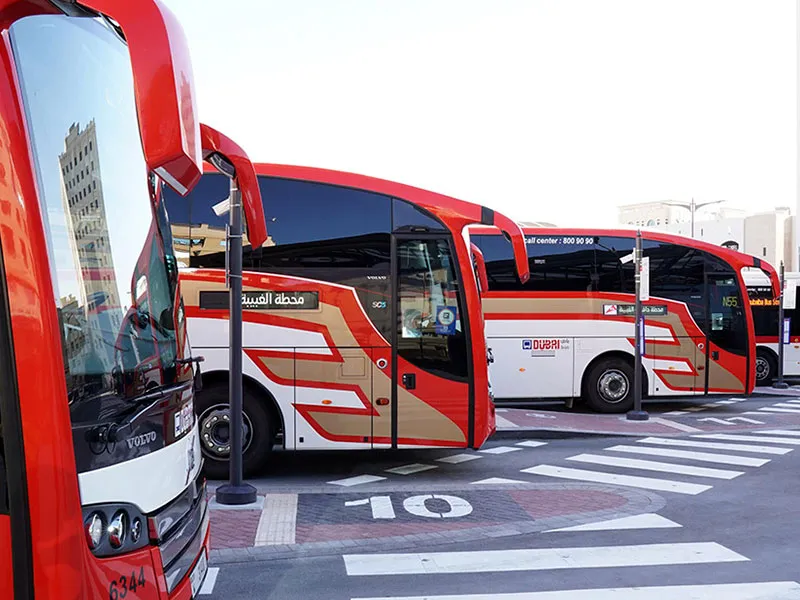
Dubai has a direct RTA intercity bus, route E700, which runs between Union Square Bus Station and Fujairah Bus Station with several trips every day, usually about every ninety minutes during daytime hours. The typical fare is around twenty-five dirhams, and the journey takes about two hours, depending on traffic.
Sharjah also connects to the east coast through intercity bus route 116 from Al Jubail Bus Station toward Khorfakkan, which passes through the Fujairah region and nearby towns, giving budget travellers another useful corridor across the mountains.
If you are landing at Dubai International Airport and heading straight to Fujairah, you can either take a taxi directly from the airport or use the metro and bus combination. One common pattern is to ride the metro to Union, then board the E700 toward Fujairah. This keeps costs lower than a direct airport taxi and follows the core advice in any practical transport guide for Fujairah aimed at budget-conscious travellers.
3️⃣ 🚕 Taxis in Fujairah and the new Hala e-hailing service
Taxis remain the most convenient way to move around Fujairah City and to nearby beach resorts. They are regulated by Fujairah Transport Corporation, which sets official tariffs and phone numbers for bookings. Typical starting fares inside the city are around ten dirhams, with a price per kilometre that usually falls between one point seven and two dirhams, depending on the latest approved schedule.
Until recently, most visitors had to flag taxis on the street or ask the hotel reception to call one. From November 2025, however, a new partnership between Fujairah Transport Corporation and Hala allows riders to book a Fujairah taxi directly through the Careem app by choosing Hala Taxi and selecting Fujairah as the city. This brings real-time tracking and digital payment to the emirate for the first time, mirroring the experience riders know from Dubai and Ras Al Khaimah.
Ride-hailing brands such as Uber officially list cities like Dubai, Abu Dhabi, and Sharjah, but not Fujairah, so the Hala service inside the Careem platform is currently the main way to request a car through an app. For a smooth experience, any transport guide for Fujairah should remind visitors to download Careem in advance, add a payment card, and confirm that their roaming data or local SIM is active before they arrive.
4️⃣ 🚌 Public buses inside Fujairah and intercity routes
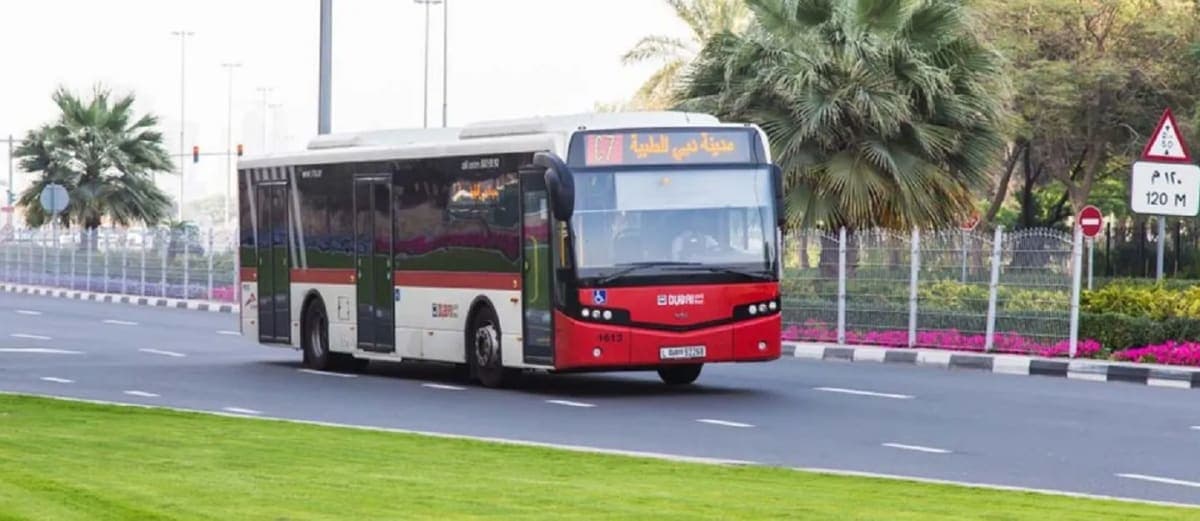
Fujairah has a modest network of local buses operated by Fujairah Transport Corporation, which links key neighbourhoods, malls, and the main bus station. The vehicles are air-conditioned and fares are low compared to taxis, often around ten dirhams or less for city journeys. Services follow fixed routes and timetables, so they work best if you are staying longer and have time to get used to the patterns rather than rushing between meetings.
For intercity travel, public buses play a central role in any serious transport guide for Fujairah. The E700 between Dubai and Fujairah remains the backbone route for visitors without a car, while the 116 between Sharjah and the east coast serves travellers who are based in the northern emirates. Timings can change with seasonal demand, so it is wise to confirm the latest schedule using the RTA timetable search or the Wojhati journey planner before you travel.
5️⃣ 🚙 Car rental and self-driving for exploring the mountains
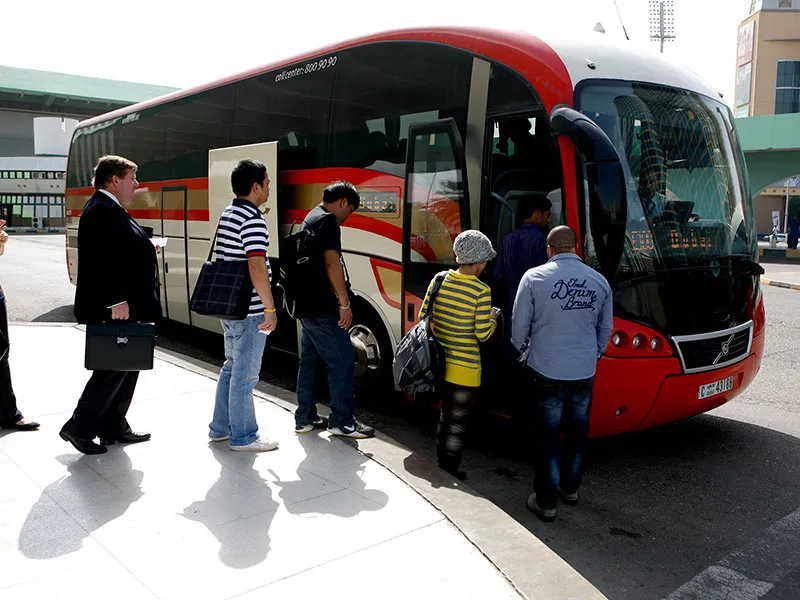
If you want to explore beyond Fujairah City to places like Al Aqah beach, Wadi Wurayah, or the mountain passes toward Masafi, renting a car often becomes the most flexible option. Within a detailed transport guide for Fujairah, this is often highlighted as the best choice for travellers who prefer flexible schedules. Major international and regional rental firms operate in Fujairah and in Dubai for pick up and drop off, and the roads between the emirates are well-maintained. Driving is on the right side of the road, and signage is mainly in Arabic and English.
Parking in Fujairah is generally easier than in Dubai, with wide streets, mall parking, and hotel parking usually included for guests. Fuel costs remain relatively low by global standards, which encourages road trips along the coast. Any transport guide for Fujairah aimed at adventurous visitors should highlight that some wadis and mountain tracks may require a vehicle with higher ground clearance, and that off-road driving without experience is not recommended.
When renting, always check the mileage policy, insurance coverage, and cross-emirate travel conditions. If you are collecting the car in Dubai and returning it in Fujairah or vice versa, ask about one-way fees in advance so you can compare total costs with taxi or bus plus local rides.
6️⃣ 🚐 Hotel shuttles, tours, and private transfers
Many beach resorts and larger hotels in Fujairah offer their own shuttle services. These can include scheduled trips to Dubai malls on weekends, transfers between the resort and Fujairah Bus Station, or private car services to and from Dubai International Airport for guests who prefer direct travel. Because these services change based on season and occupancy, a careful transport guide for Fujairah will always advise travellers to confirm current schedules and charges directly with their hotel before arrival.
Tour operators based in Dubai often include Fujairah and the east coast in day trips that combine mountain scenery with snorkelling or heritage sites. These tours normally include transport in the package price, which can be attractive if you have limited time and do not want to manage your own driving. For groups or corporate travellers, Fujairah Transport Corporation also provides bus rental for events, which can be arranged through their official platform.
7️⃣ 🚶♀️ Walking, cycling, and local mobility tips
Fujairah City is compact in the central area near the corniche, shopping centres, and some hotels, so short trips on foot are possible, especially in the cooler months between November and March. Pavements are present along many main roads, yet distances between attractions can still be longer than they appear on a map, and summer heat makes even short walks challenging during the daytime.
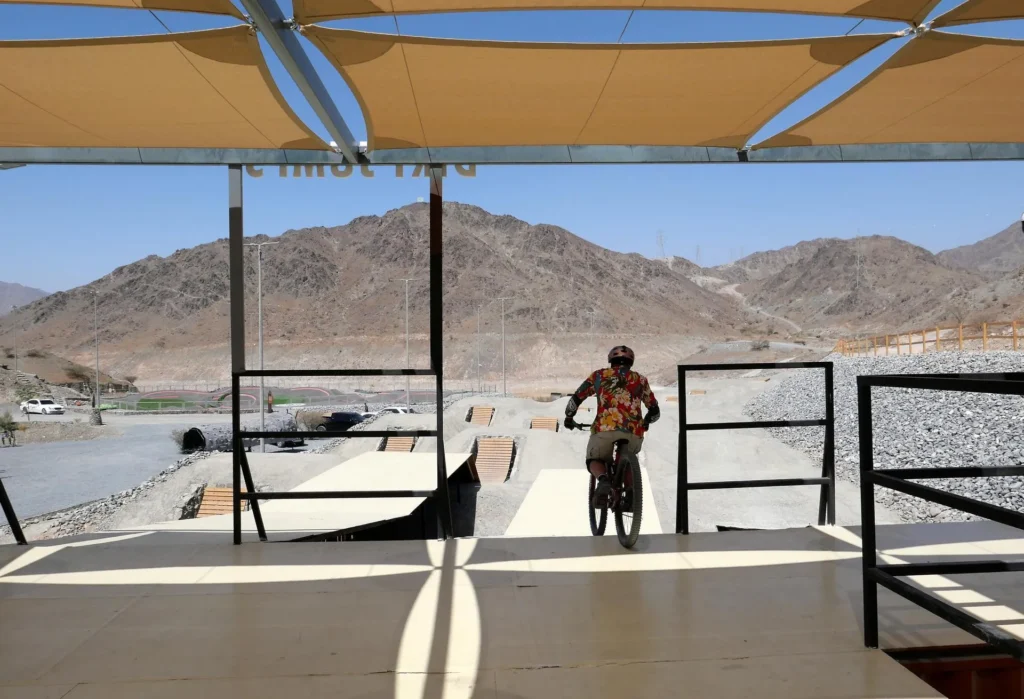
Cycling is growing slowly in the emirate, with some riders using the coast road early in the morning, but there is not yet a dedicated public bike-sharing system like the ones found in Dubai. Because micro mobility infrastructure is still developing, a sensible transport guide for Fujairah treats walking as a complement to taxis and buses rather than a complete replacement.
Whenever you walk, carry water, use sun protection, and plan routes that avoid major junctions where pedestrian crossings are limited. At night, choose well-lit streets and use taxis for longer distances.
8️⃣ 📅 Planning your day using this transport guide for Fujairah
To make the most of your time, start by mapping your accommodation, Fujairah Bus Station, key attractions, and the main exits toward Dubai and Sharjah. Then decide how many long journeys you will make and which mode fits each one. For example, you might arrive by E700 bus from Dubai, rely on taxis and hotel shuttles inside the city, and rent a car for a single day to explore beaches further north. This blend validates why a multimodal transport guide for Fujairah is so useful.
Keep in mind that weekends in the United Arab Emirates fall on Saturday and Sunday, which can influence traffic and bus crowding. Public holidays, large events, and bad weather in the mountains can also change conditions on the main highways linking Fujairah and the west coast, so allow extra time for transfers to airports.
Whenever you are unsure of timings, use official journey planners, hotel concierge desks, and updated local sources rather than third-party social media posts. Treat this transport guide for Fujairah as a starting point and then double-check specific trips once you know your exact travel dates.
9️⃣ ✅ Conclusion: Practical summary of this transport guide for Fujairah
Fujairah offers a relaxed contrast to the skyscrapers of Dubai, yet it is closely connected by regular intercity buses and modern highways. Inside the emirate, regulated taxis supported by the new Hala e-hailing option, a small but useful bus network, and hotel shuttles give visitors multiple ways to move comfortably between the coast, the city centre, and nearby towns. Renting a car adds even more freedom for travellers who want to reach remote wadis and beach stretches.
By understanding how these pieces fit together, this transport guide for Fujairah helps you match each journey with the right option, balance comfort with cost, and reduce stress on travel days. Use it alongside official transport websites and local advice once you arrive, and you will be well placed to enjoy Fujairah’s scenery, heritage, and hospitality without worrying about how to get from place to place.
🔗 References
https://transport.fujairah.ae
https://www.rta.ae
https://wojhati.rta.ae
https://eforms.srta.gov.ae/eforms/BusSchedule.aspx?Route=Intercity
Also Read: Banks in Fujairah 2025: Complete Guide for Residents and Investors