1️⃣ Introduction
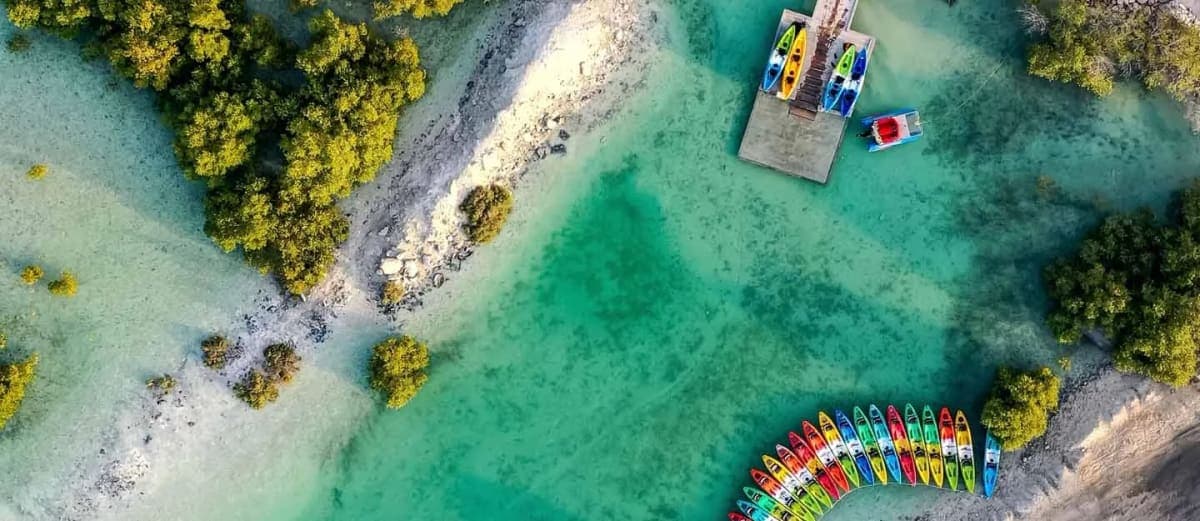
Off the western coast of Abu Dhabi, Sir Bani Yas Island has evolved into one of the region’s most important conservation destinations, known for its Arabian Wildlife Park, luxury resorts, and growing nature-based tourism. At the heart of its coastal ecosystem are the mangroves on Sir Bani Yas Island, a living green barrier where land and sea meet, sheltering birds, marine life, and delicate shorelines.
Created over several decades as part of the wider vision of the late Sheikh Zayed Bin Sultan Al Nahyan to green the desert and restore wildlife, the island now holds millions of trees and extensive protected areas, including coastal habitats that support mangrove growth.
While many visitors know Sir Bani Yas for its safaris and desert landscapes, the mangrove areas on the eastern shores add a contrasting scene of calm tidal channels, sea grass beds, and rich birdlife. Kayaking routes and guided experiences by resort activity teams now bring guests close to this environment in a carefully managed, low-impact way.
2️⃣ Geography and setting of the mangroves
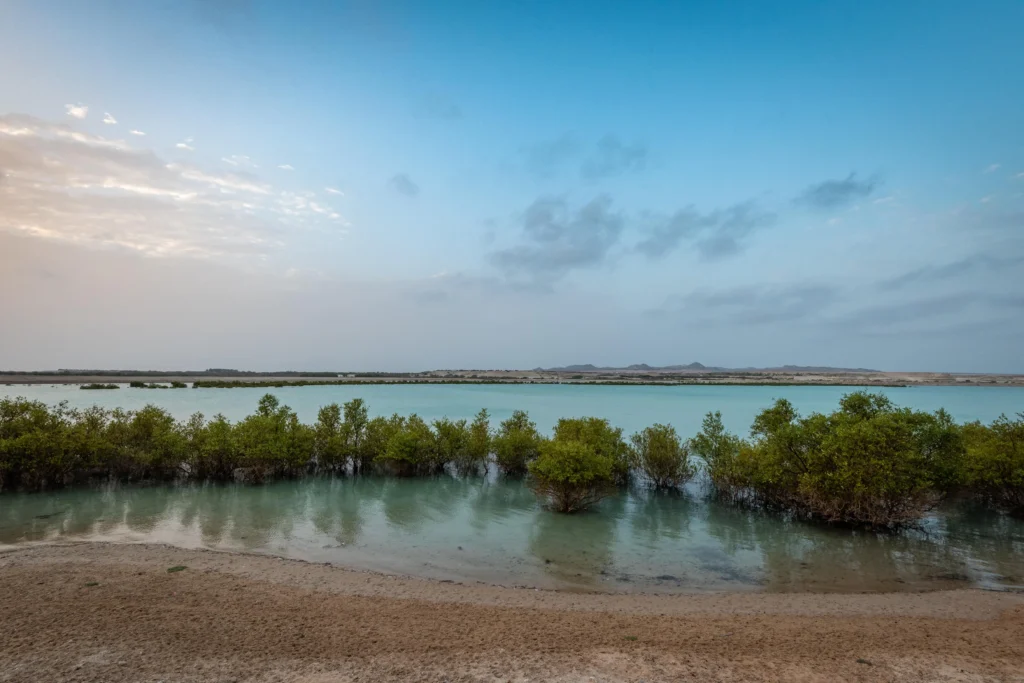
Sir Bani Yas Island lies around one hundred seventy kilometres southwest of Abu Dhabi city, in the Arabian Gulf, and is the largest natural island in the United Arab Emirates. The coastline includes sandy beaches, rocky headlands, shallow lagoons, and protected marine zones. Along parts of the eastern shoreline, tidal conditions and sheltered bays allow the mangroves on Sir Bani Yas Island to thrive in pockets close to the resort areas.
Mangroves in Abu Dhabi are typically dominated by the grey mangrove species Avicennia marina, which tolerates high salinity and fluctuating tides. The Environment Agency Abu Dhabi notes that mangroves in the emirate act as natural barriers against tidal surges, help purify surrounding water, and remove carbon dioxide from the atmosphere. The same functions apply to the coastal stands around Sir Bani Yas, where the trees fringe shallow channels that open into the Gulf.
3️⃣ Wildlife and plant life in the mangroves
The mangroves on Sir Bani Yas Island provide feeding and resting areas for many coastal and marine species recorded by activity providers on the island. Anantara’s Al Yamm resort, located on the eastern side, describes guided kayak trips that pass cormorants, black winged stilts, grey herons, and even flocks of flamingos that gather in the shallows.
Below the surface, seagrass beds and calm channels create nursery grounds for fish and invertebrates. Visitors sometimes spot turtles and dugongs in the surrounding waters during kayak or boat excursions, while dolphins may be seen further offshore in deeper water near the island. Crabs, small fish, and molluscs use the mangrove roots as shelter, supporting the broader marine food web.
4️⃣ Conservation vision and protection measures
Sir Bani Yas was declared a nature reserve under the personal direction of Sheikh Zayed in the late 1970s, accompanied by a ban on hunting and large-scale tree planting campaigns. More than half the island is now designated as the Arabian Wildlife Park, home to thousands of free-roaming animals, including Arabian oryx, gazelles, and giraffes.
Coastal and marine areas receive similar attention. Etihad and Abu Dhabi tourism resources highlight an eight-kilometre no-fish zone around the island, which reduces pressure on marine life and supports the recovery of coastal ecosystems. Within this wider framework, the mangroves on Sir Bani Yas Island are recognised by resorts and tour operators as sensitive habitats, with guided access rather than unrestricted public entry.
5️⃣ Kayaking and guided activities in the mangroves
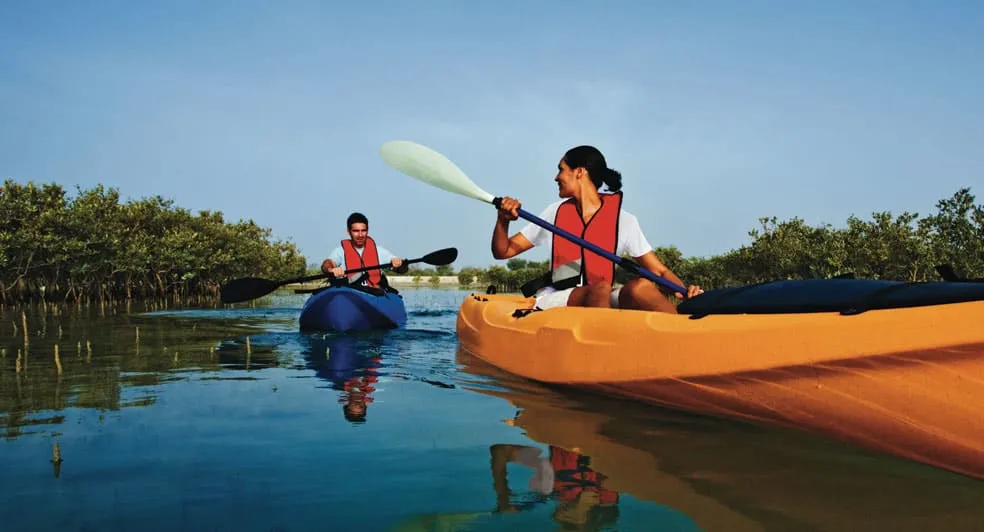
Kayaking is the most popular way to experience the mangroves on Sir Bani Yas Island, as paddling allows guests to move quietly through narrow channels without disturbing birds or marine life. Anantara Al Yamm promotes sunrise kayak excursions that glide along the eastern shore, with chances to see feeding birds, turtles, and possibly dugongs near the seagrass beds.
Regional travel providers also describe mangrove and sea kayaking around the island as a signature experience, noting views of flamingos, flying fish, and other wildlife that rely on the mangrove habitat. Desert Islands Watersports and similar centres offer organised kayaking routes that extend for several kilometres in protected waters around Sir Bani Yas, with clear instructions that fishing is not allowed in these zones. These guidelines help keep the mangroves on Sir Bani Yas Island focused on nature observation rather than extractive activities.
Other coastal experiences, such as stand-up paddling and gentle shoreline walks, are sometimes available through resort activity desks, yet they remain subject to tide and weather conditions to reduce any stress on the environment.
6️⃣ When to visit and what to expect
The best conditions for exploring the mangroves on Sir Bani Yas Island generally coincide with calm weather and suitable tides, particularly for kayaking. Travel and activity guides for Abu Dhabi mangroves recommend planning around higher tide periods, when channels are more accessible and the mangrove forests appear richer and more visually impressive.
On Sir Bani Yas, kayak routes are typically scheduled by resort teams who understand local tide tables, so guests usually book set time slots rather than going out independently. Expect to wear a life jacket, follow guide instructions closely, and keep noise levels low to increase chances of seeing wildlife. Most tours cater to beginners, with stable boats and safety briefings before launching.
7️⃣ Educational and research value
As awareness of climate change and blue carbon increases, mangroves across Abu Dhabi, including the mangroves on Sir Bani Yas Island, are attracting more scientific and educational interest. Environment Agency Abu Dhabi describes mangroves as one of the emirate’s key ecological assets, emphasising their role in carbon absorption, water purification, and coastal protection.
While specific research projects on Sir Bani Yas are usually coordinated through government bodies and resort partners rather than public programmes, guided tours already include strong interpretive elements. Conservation-themed excursions explain breeding and reintroduction efforts for terrestrial animals and often touch on how coastal habitats such as mangroves and seagrass support marine species and stabilise shorelines.
For school groups, university teams, or nature enthusiasts, visits can therefore function as informal field trips, demonstrating how a desert island has been transformed into a modern conservation case study where rewilding, marine protection, and ecotourism are managed together.
8️⃣ Responsible tourism and visitor guidelines
To help protect the mangroves on Sir Bani Yas Island, visitors are expected to follow responsible tourism practices that align with resort rules and conservation guidelines. Activity providers typically ask guests not to disturb wildlife, not to remove shells, plants, or animals, and not to attempt landing kayaks directly within tight mangrove thickets.
By treating the mangroves on Sir Bani Yas Island as a living classroom rather than a playground, travellers help maintain the conditions that attract birds, fish, and marine mammals, and support continued investment in conservation projects on and around the island.

9️⃣ Mangroves and the broader Sir Bani Yas experience
For many guests, the mangroves on Sir Bani Yas Island become a highlight alongside the better known safari drives through the Arabian Wildlife Park. Etihad travel information and Abu Dhabi tourism resources describe how the island combines wildlife viewing, water sports, historical sites, and luxury stays within a single protected destination.
Mangrove excursions add a calm, contemplative dimension to this mix. After watching herds of gazelles and oryx on the plains, or exploring the early Christian monastery site that dates back to around the seventh century, visitors can shift to silent paddling through tidal channels or simply watch birds from the shoreline.
🔟 Conclusion
The mangroves on Sir Bani Yas Island are living proof that careful planning and long-term conservation can transform a remote Gulf island into a thriving sanctuary for wildlife and people. As of 2025, these coastal forests help stabilise the shoreline, shelter birds and marine life, and frame some of the most memorable nature experiences in Abu Dhabi.
For nature lovers, the mangroves on Sir Bani Yas Island offer a quiet contrast to the open plains of the Arabian Wildlife Park, with calm channels, seagrass beds, and rich birdlife turning each paddle stroke into a chance for discovery. Guided experiences built around the mangroves on Sir Bani Yas Island make it easier for guests to learn how this habitat supports turtles, fish nurseries, and migratory species while staying within clearly defined conservation rules.
Kayaking and conservation-focused tours through the mangroves on Sir Bani Yas Island also play an educational role, showing how blue carbon ecosystems help capture carbon and buffer coasts in a changing climate. By choosing low-impact activities around the mangroves on Sir Bani Yas Island, visitors directly support the model of responsible tourism that keeps this habitat healthy and productive. As Abu Dhabi continues to invest in protected areas, the mangroves on Sir Bani Yas Island stand out as a flagship example of how marine and terrestrial reserves can work together on a single destination.
For future guests planning a stay at the island resorts, making time to explore the mangroves on Sir Bani Yas Island is just as important as joining a wildlife drive or visiting the historic monastery site. In every season, the mangroves on Sir Bani Yas Island invite travellers to slow down, watch the tides, and experience a rare combination of desert scenery and flourishing coastal forest in one remarkable place.
External links
- Visit the Abu Dhabi official page for Sir Bani Yas Island
- Anantara Al Yamm Sir Bani Yas kayaking and mangrove experiences
- Environment Agency Abu Dhabi information on Mangrove National Park
- Sir Bani Yas Island overview from Etihad and Abu Dhabi
- Sir Bani Yas destination profile, including mangrove and sea kayaking
Also Read: Why Is Sir Bani Yas Island Famous? A Complete 2025 Travel & Wildlife Guide