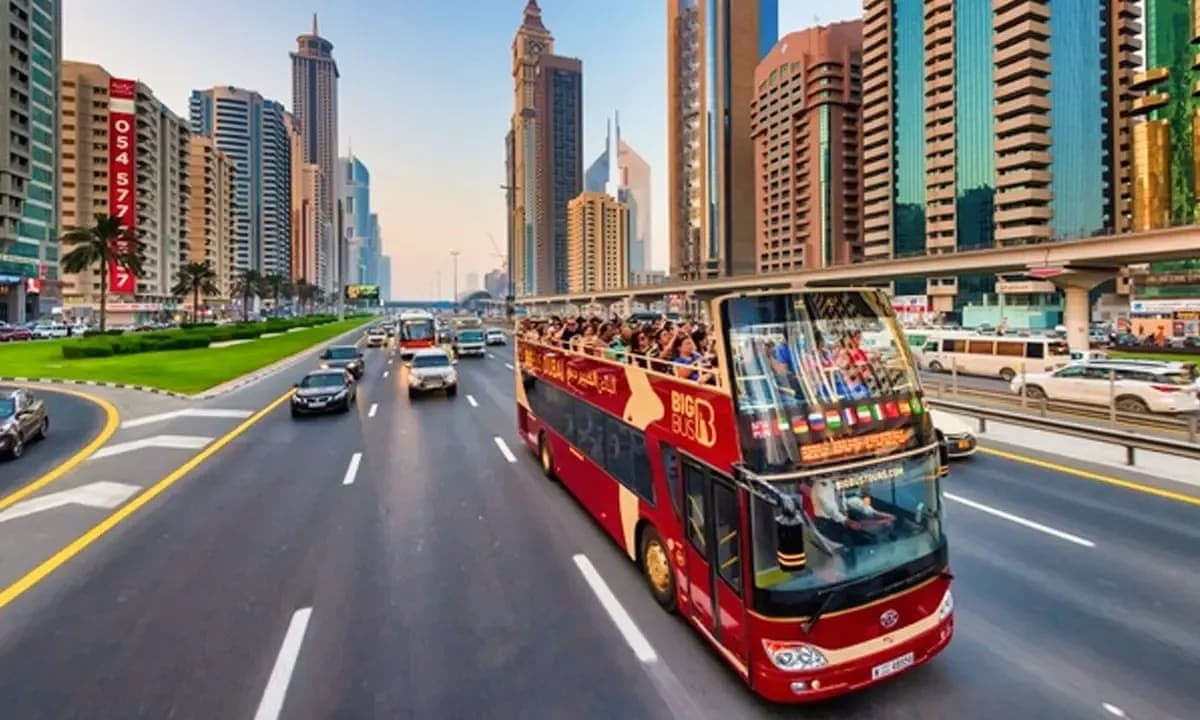
1️⃣ Introduction
Dubai has invested heavily in clean, fast, and connected public transport over the past decade, and by 2025, getting around the city is easier than ever. Whether you are a first-time visitor or a long-term resident, this transport guide for Dubai will help you move confidently between the airport, beaches, malls, and historic districts without relying only on private cars.
The emirate’s Roads and Transport Authority manages an integrated network that includes the metro, tram, buses, marine transport, and taxis, all linked through a single smart payment system. Ridership keeps growing every year, with hundreds of millions of journeys recorded across these modes, which shows how useful a well-planned transport guide for Dubai can be for daily life and tourism alike.
2️⃣ Key facts you should know before you ride
Before using any mode, it helps to understand a few basics that appear in almost every reliable transport guide for Dubai.
• You pay for almost all public modes with a contactless Nol card, which works on metro, tram, buses, most marine services, and even many taxis and parking meters.
• The network is organised into fare zones, so the price of a trip depends on how many zones you cross rather than the number of transfers.
• Air-conditioned walkways and bus shelters make it realistic to use public transport even during the hotter months.
• Most lines connect well with major attractions, including Dubai International Airport DXB the historic Creek, Downtown Dubai, Dubai Marina, and Expo City Dubai.
Because the network is fully cashless and highly automated, planning through a trusted transport guide for Dubai will save you time at stations and stops.
3️⃣ Nol card and Nol Travel Card, your smart tickets
Every transport guide for Dubai starts with the Nol card because you cannot use the metro, tram, or standard public buses without one. A NOL card is a reusable smart card that you tap in when you start a journey and tap out when you finish. The correct fare is calculated automatically based on zones and deducted from the stored balance.
There are several Nol products, including the popular Silver card, a Gold card for premium cabin access, and personalised Blue cards that can be linked to an Emirates ID. For short stays, visitors can buy a Red ticket or one of the newer tourist-friendly options, such as the Nol Travel Card, which adds discounts on attractions, hotels, and shopping to normal transport benefits.
You can purchase and top up Nol at metro and bus stations, ticket machines, many supermarkets, and through the Nol Pay mobile app or the RTA website. Nol is also widely accepted for paid public parking and in thousands of retail outlets across the city, which makes it a centrepiece in any practical guide to Dubai transport.
4️⃣ Dubai Metro fast backbone of the city
No transport guide for Dubai is complete without a close look at the metro, which is usually the quickest way to cross the city during busy hours. The driverless system currently operates two main lines, Red and Green, with an additional Route 2020 extension that runs to Expo City Dubai. Together, they connect key residential and commercial districts from Centrepoint and Rashidiya in the north to Jebel Ali and the Expo area in the south.
Trains are frequent with shorter intervals during peak times, and stations are clearly signposted in English and Arabic. Dedicated cabins are reserved for women and children and for Nol Gold card holders who want a quieter, more spacious ride. The metro links directly to DXB Terminals 1 and 3, which is why every airport-focused transport guide for Dubai recommends it as the quickest way into town during the day and evening.
5️⃣ Dubai Tram and monorail access to beaches and Marina
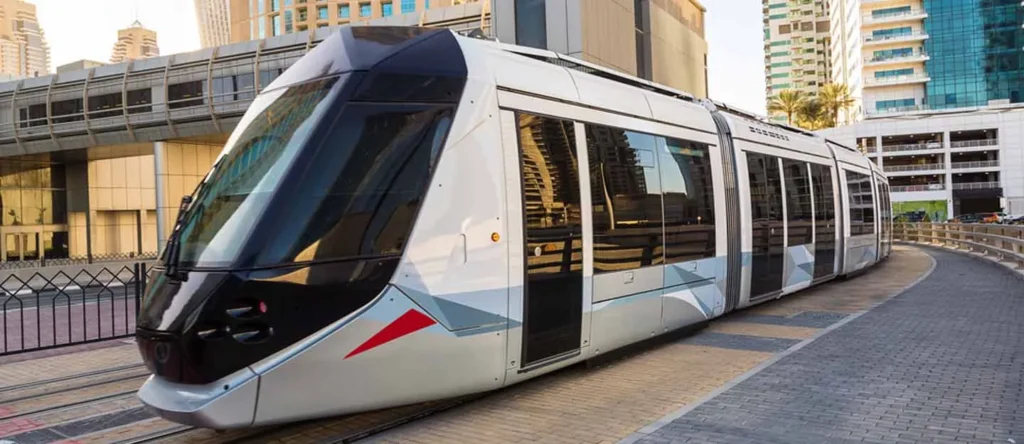
If your transport guide for Dubai includes areas such as Dubai Marina, Jumeirah Beach Residence, and Palm Jumeirah, you will almost certainly use the tram. The circular line runs at street level, connecting Marina Mall JBR, the Walk, and key interchanges with the metro. It also links to the Palm Jumeirah monorail, which continues along the Palm trunk toward Atlantis, giving smooth car-free access to one of the city’s best-known resort zones.
The tram accepts the same Nol cards as the metro and is especially convenient for short hops between waterfront neighbourhoods. For visitors staying in this part of town, a clear Dubai transport guide should highlight how easy it is to combine tram, metro, and monorail on a single itinerary.
6️⃣ Buses and intercity coaches reach every district
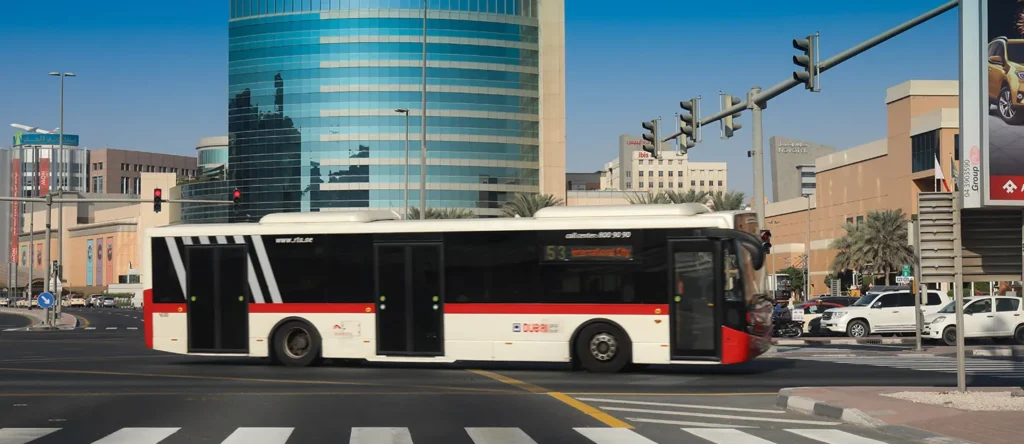
Buses fill in the gaps between metro stations and serve residential areas that rail lines do not reach, so no serious transport guide for Dubai can ignore them. Modern air-conditioned vehicles run on an extensive grid of routes that cover most neighbourhoods from Deira and Bur Dubai to newer districts such as Dubai Hills and Dubai Silicon Oasis. Many routes operate from early morning until after midnight, and a few key services, including airport links and some circular lines, run around the clock.
Bus fares use the same zone-based system as the metro and are paid with Nol when you tap on at the front door and tap off as you exit. Intercity coaches connect Dubai with other emirates, including Abu Dhabi, Sharjah, and Ajman, which is especially useful if your personal Dubai transport guide forms part of a longer trip around the United Arab Emirates.
7️⃣ Marine transport abras ferries and water taxis
Any waterfront-focused transport guide for Dubai should cover marine options because they combine sightseeing with practical commuting. Traditional wooden abras still shuttle passengers across Dubai Creek between Bur Dubai and Deira in just a few minutes, and modern air-conditioned abras now operate on additional routes along the Creek and the Canal.
There are also larger ferries that run scheduled services between Dubai Marina, Palm Jumeirah, and the Creek, as well as small water taxis that can be booked for point-to-point travel. Many of these services accept Nol, although some tourist cruises use separate tickets, so a careful Dubai transport guide will always remind you to check payment options and departure times in advance.
8️⃣ Taxis e hailing, and shared mobility options
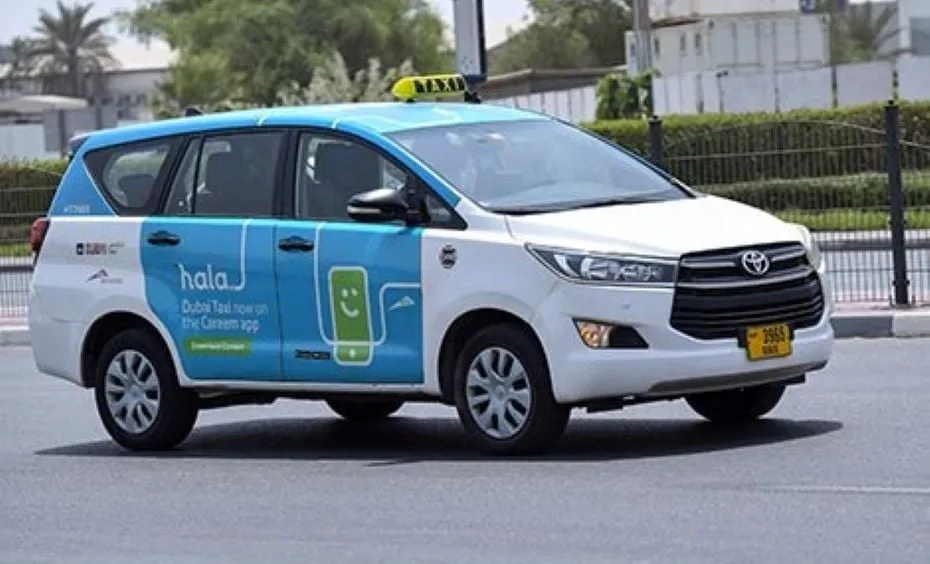
Even the most public transport-focused traveller will occasionally need a taxi, which is why every balanced transport guide for Dubai explains how taxis fit into the wider system. Official cream coloured cabs are metered, accept card payments, and are regulated by the RTA. You can hail them on the street from taxi ranks at malls and hotels, or through smart apps such as S hail, which let you book standard taxis or limousine-style vehicles in line with official Dubai Taxi guidance.
Ride-hailing services and car-share schemes operate alongside regular taxis, giving extra flexibility for late-night journeys or destinations beyond the main public transport corridors. When combined with metro, tram, buses, and marine services, taxis turn a basic city map into a door-to-door Dubai transport guide that works twenty-four hours a day.
9️⃣ Practical tips for using this guide
To make sure you get the most from this transport guide for Dubai, keep the following practical tips in mind.
- Buy and top up a Nol card as soon as you arrive, then register it if you plan to stay longer, so that any remaining balance can be protected if the card is lost.
- Use journey planning tools such as the official RTA journey planner or smart apps to check live departure times and route options before you leave your hotel or home.
- Travel outside the sharpest peak periods when possible, especially on the Red line and on busy bus routes serving central business districts.
- Respect cabin rules, including women and children only areas and priority seating for people of determination, older passengers, and parents with small children.
- Keep your Nol card topped up with a comfortable margin so you avoid being blocked at gates. This is one of the simplest yet most overlooked points in almost any transport guide for Dubai.
- Combine modes creatively, for example, metro to a central hub, tram to the beach, then an abra or ferry at sunset to turn an ordinary commute into an easy mini tour of the city.
🔟 Conclusion
Public transport in Dubai has matured into a clean, safe, and efficient network that rivals many larger global cities, and it keeps expanding with new lines, stations, and services. With a Nol card in your pocket and this transport guide for Dubai in hand, you can explore historic souqs, futuristic skyscrapers, and quiet residential neighbourhoods with confidence.
By understanding how metro, tram, buses, marine services, and taxis connect, you will be able to design your own personalised transport guide for Dubai that matches your budget, schedule, and style of travel while reducing your environmental footprint and avoiding traffic wherever possible.
References and useful links
- Roads and Transport Authority public transport overview
- RTA Nol card information
- Choose Nol card types
- Nol fares and zone information
- Metro and tram stations map
- Dubai public transport overview from Invest in Dubai
- Nol Travel Card details for visitors
- Marine transport and waterways in the UAE
Also Read: Best Residential Areas in Dubai for Comfortable Living in 2025