1️⃣ Overview of Banks in Dubai
Banks in Dubai play a central role in positioning the city as a regional gateway between Asia, Europe, and Africa. The emirate hosts a mix of local, regional, and international financial institutions serving residents, businesses, and global investors. The network of retail branches, corporate banking desks, and wealth management offices has expanded in recent years as Dubai attracts more companies and high-net-worth individuals.
The financial system is part of the wider United Arab Emirates banking network, yet Dubai stands out for its concentration of corporate and investment activity, especially in the Dubai International Financial Centre, often called DIFC. When people talk about Banks in Dubai today, they are referring not only to traditional high street branches but also to Islamic institutions and fast-growing digital providers.
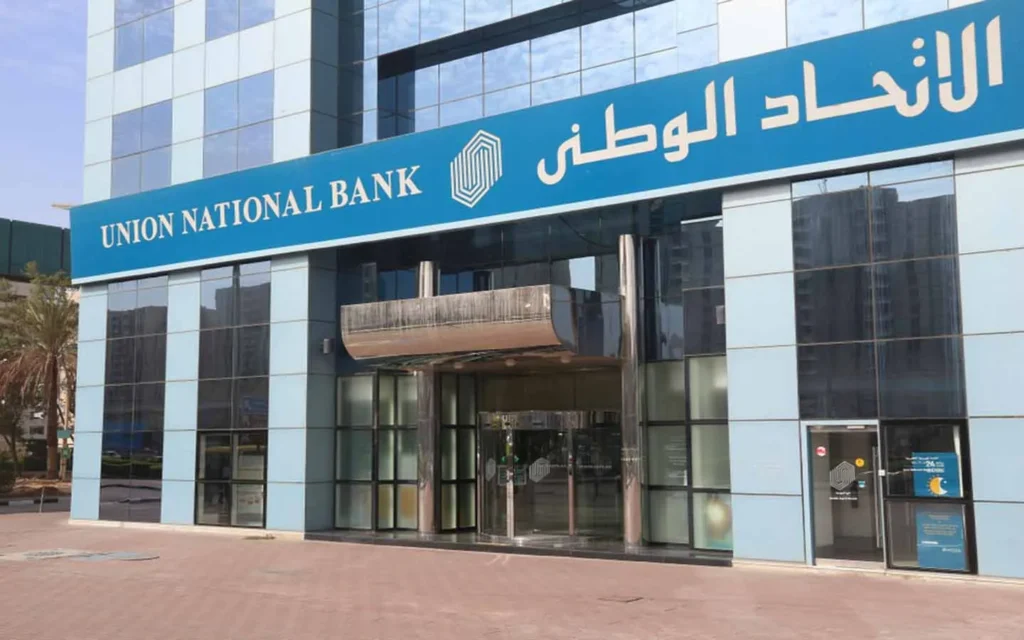
2️⃣ Regulation and Customer Protection in Dubai’s Banking Sector
The banking sector operates under the oversight of the Central Bank of the United Arab Emirates, which regulates and supervises licensed financial institutions, issues prudential rules, and monitors stability across the system. Recent legal updates, including Federal Decree Law number six of twenty twenty five on the Central Bank and regulation of financial institutions, continue to strengthen the framework for governance, risk management, and consumer protection.
This strong framework is important for Banks in Dubai because it sets capital and liquidity requirements, anti-money laundering and counter terrorism financing standards, and rules for how banks treat customers. The authorities have also shown a willingness to enforce the rules; for example, recent public penalties for breaches of Sharia governance and anti-money laundering obligations underline the focus on transparency and financial integrity in the United Arab Emirates banking sector.
3️⃣ Main Categories of Banks in Dubai
There are three broad categories of Banks in Dubai that customers will typically encounter.
First are local conventional banks. These are United Arab Emirates headquartered institutions that offer current and savings accounts, credit cards, loans, mortgages, and corporate banking based on standard interest-bearing products.
Second are Islamic banks, which structure their products according to Sharia principles such as risk sharing and asset backing rather than simple interest. These institutions provide accounts, cards, and financing based on contracts like Murabaha, Ijara, and Mudaraba while still offering modern digital services.
Third are international banks. Many of the world’s major institutions operate branches or subsidiaries in the emirate, often focused on wealth management, corporate lending, trade finance, and investment banking. These banks are present both onshore and within the DIFC, which has its own common law-based regulatory environment under the Dubai Financial Services Authority.
4️⃣ Leading Local Retail Banks
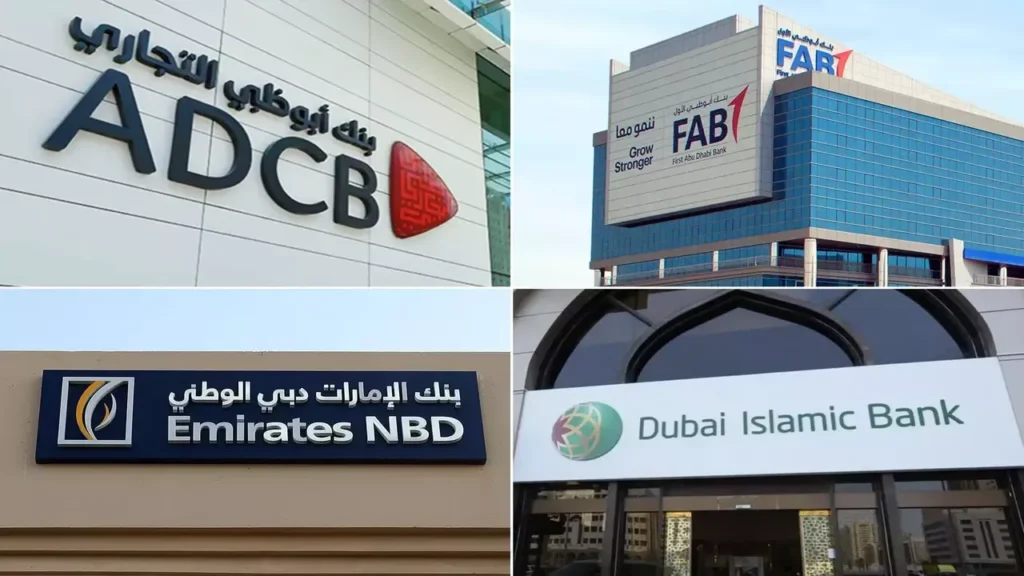
Among all Banks in Dubai, a few local names dominate everyday personal and business banking. Emirates NBD, for example, is often described as one of the largest banks in the country, headquartered in Dubai and combining conventional and Islamic services under one group.
Other key institutions with a strong presence in the city include Dubai Islamic Bank, Emirates Islamic, Mashreq, Abu Dhabi Commercial Bank, and First Abu Dhabi Bank. These banks run extensive branch and ATM networks, mobile and internet platforms, and specialised units that serve small and medium enterprises as well as corporate clients.
For individual customers, expats comparing Banks in Dubai often start by looking at salary account packages, international transfer fees, multi-currency cards, and loyalty or rewards programmes. Many of the leading lenders have introduced instant digital account opening for eligible residents and offer relationship tiers that provide fee waivers, airport lounge access, or dedicated relationship managers once certain balance thresholds are met.
From the business perspective, corporate customers value cash management, trade finance, and supply chain solutions, which are areas where the largest institutions have invested heavily in technology. This focus on digital platforms and straight-through processing has helped raise service standards among leading Dubai banks.
5️⃣ Islamic Banking and Sharia Compliant Choices
Sharia-compliant Banks in Dubai play a significant role in the market, serving both Muslim and non Muslim customers who prefer asset-backed financing and profit-sharing structures. Dubai Islamic Bank is widely recognised as one of the pioneers of Islamic retail and corporate banking, while Emirates Islamic and Abu Dhabi Islamic Bank also offer comprehensive product suites.
These Islamic Banks in Dubai offer current and savings accounts, credit and charge cards that work on fee and profit structures, home finance structured through Ijara or Murabaha, and business facilities that comply with Sharia rules. Customers typically have access to the same digital channels as conventional banks, including mobile apps, online portals, and contactless payments, but with additional oversight from Sharia supervisory boards.
6️⃣ International Banks and the DIFC Hub
Many global institutions base their regional operations among Banks in Dubai inside the Dubai International Financial Centre, which is a financial free zone with its own legal and regulatory system designed for cross-border finance. DIFC hosts hundreds of banks, wealth managers, insurers, and professional service firms that serve clients across the Middle East, Africa, and South Asia region.
Within this environment, international players such as HSBC Middle East, Standard Chartered, Citi, and numerous private banks operate booking centres, trading desks, and advisory teams. For high net worth and ultra high net worth clients, Banks in Dubai located in DIFC offer private banking, discretionary portfolio management, and access to international capital markets, often under English law documentation that global investors are familiar with.
7️⃣ Digital and Neo Banks in 2025
In recent years, digital-only Banks in Dubai have grown rapidly, appealing to tech-savvy residents and entrepreneurs who want app-based onboarding and low-fee international services. Notable examples include Liv by Emirates NBD, Mashreq Neo, Wio Bank, Zand Bank, and several specialist platforms aimed at freelancers and small businesses.
These institutions allow customers to open accounts from a smartphone, receive virtual or physical cards, manage multi-currency wallets, and integrate with accounting or invoicing tools. Many also provide budgeting tools, instant spending notifications, and in-app customer support, which has raised expectations for service across all Banks in Dubai.
Competition from digital providers has encouraged traditional banks to upgrade their own mobile apps and online platforms, simplifying processes such as bill payments, local and international transfers, and cheque deposits. The trend is toward paperless workflows and round-the-clock service, an important consideration for younger customers looking at Banks in Dubai.

8️⃣ How to Choose the Right Bank in Dubai and Conclusion
When choosing among Banks in Dubai, residents and businesses can start by considering their main needs: everyday salary and spending, savings and investments, property finance, business accounts or specialised trade services. It is helpful to compare account fees, minimum balance requirements, foreign exchange margins, digital features, and the quality of customer support before deciding where to open an account.
Understanding how Banks in Dubai work, from regulation and Islamic finance to digital innovation and the international role of DIFC, helps individuals and companies select institutions that match their goals. By taking time to research options, read the latest fee schedules, and, if necessary, seek independent professional advice, customers can build long-term relationships with their chosen institutions in the city that support their plans in the emirate and beyond.
References and External Links
- Central Bank of the United Arab Emirates: official information on regulation, licensing, and financial stability.
- Central Bank Licensing Procedures: summary of licensing requirements for financial institutions.
- Dubai International Financial Centre: overview of the financial free zone, its regulatory framework, and registered firms.
- Emirates NBD: example of a major Dubai-based bank serving individuals and businesses.
- Liv Digital Bank: illustration of app-led banking for younger customers in the United Arab Emirates.
- Wio Bank: a digital-first bank that supports individuals, freelancers, and small enterprises.
Also Read: Top Trusted Real Estate Agencies in Dubai for Property Hunting in 2025