🌍 Introduction: The Cultural Heartbeat of a Hidden Emirate
Among the seven emirates of the UAE, Umm Al Quwain is often regarded as the quiet storyteller — a place where time flows gently and history whispers through coral-stone walls. Unlike the metropolitan skylines of Dubai or the cultural megaprojects of Sharjah, Umm Al Quwain captivates with its authenticity. The museums in Umm Al Quwain stand as living guardians of this legacy, preserving centuries of seafaring tales, desert traditions, and archaeological wonders.
From the 18th-century Al Ali Fort to the excavations of Ed-Dur — one of the largest pre-Islamic coastal settlements in the region — the museums in Umm Al Quwain provide visitors with a rare and unfiltered window into Arabian history. These institutions, though smaller in size, offer unmatched depth in storytelling and emotional connection.
In 2025, the emirate’s Department of Tourism and Antiquities has continued upgrading its museums with better visitor facilities, improved preservation methods, and digital displays, ensuring each museum offers both heritage and modern comfort.
1️⃣ UAQ National Museum – The Crown Jewel of Umm Al Quwain
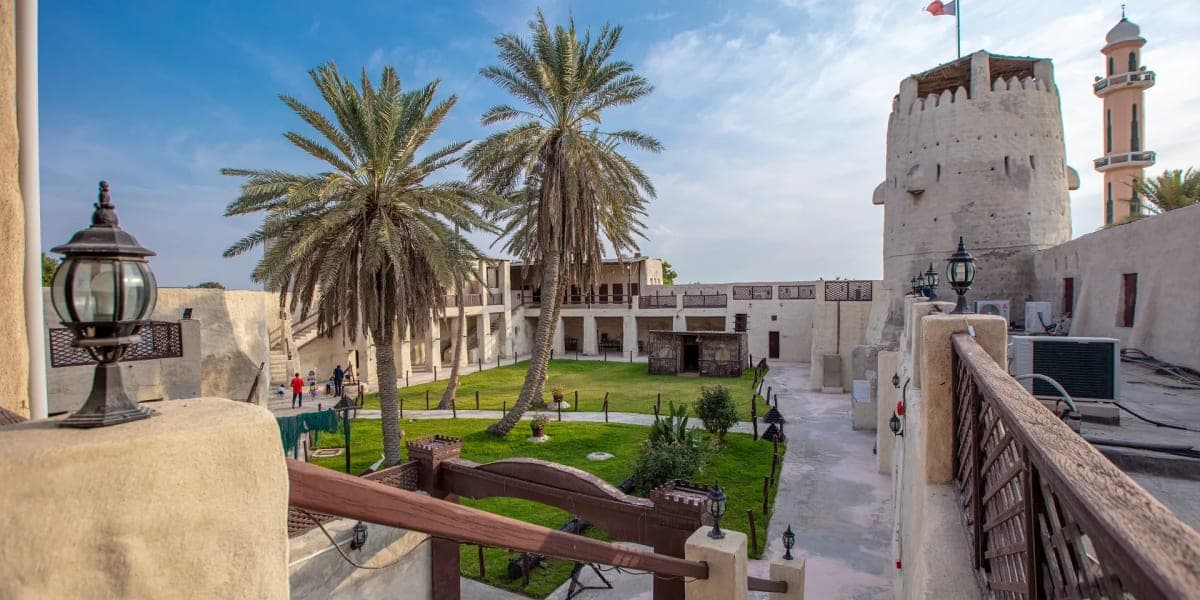
The Umm Al Quwain National Museum, located within the historic Al Ali Fort, remains the centerpiece of all museums in Umm Al Quwain. Built in 1768, the fort once served as the royal residence for the ruling Al Mualla family and later as the seat of government. Its weathered coral stones and teakwood doors tell stories of both strength and survival.
🏺 What to Discover Inside
Visitors are greeted by courtyards filled with cannons, palm-frond shelters, and traditional fishing boats. Inside, the museum unfolds across thematic rooms:
- Heritage & Ruler’s Gallery: Showcases documents, treaties, and portraits tracing the lineage of Umm Al Quwain’s rulers.
- Archaeology & Maritime Hall: Displays artifacts from Ed-Dur and Tell Abraq — pottery, coins, and tools dating back over 2,000 years.
- Weapons Room: Exhibits swords, muskets, and shields used in the emirate’s defense.
- Domestic Life Wing: Recreates kitchens, majlis areas, and traditional clothing displays, showing Emirati family life from centuries past.
🕰 Visitor Details
- Location: Old Souq area (Madeena Al Qadeema)
- Timings: 8 AM–1 PM, 5 PM–8 PM (closed Friday mornings)
- Entry Fee: Approx. 5 AED (cash preferred)
- Best Time to Visit: Late afternoon for stunning light over the fort walls
The fort’s renovation in 2024 introduced new lighting and interpretive signage, making it one of the most immersive museums in Umm Al Quwain for both tourists and locals alike.
2️⃣ Umm Al Quwain Center of Antiquities – The Archaeologist’s Treasure
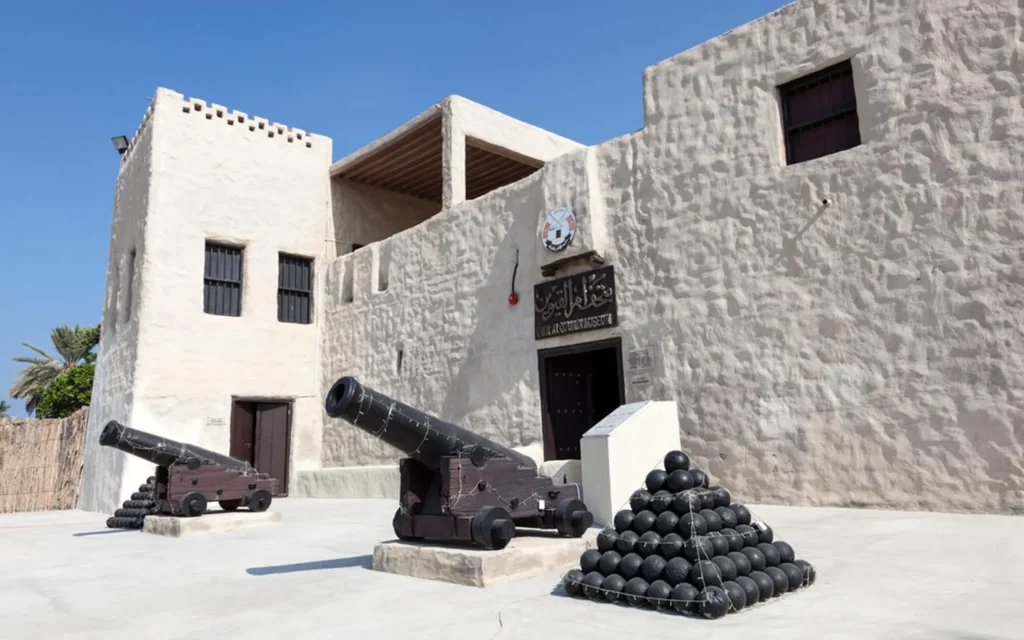
Located not far from the fort, the Umm Al Quwain Center of Antiquities bridges science and storytelling. This museum focuses entirely on archaeological finds that shaped the identity of the emirate.
🏺 Key Exhibits
- Ancient Pottery Collection: From Neolithic to Iron Age periods, including painted shards found near Ed-Dur.
- Burial Artifacts: Jewelry, beads, and funerary items revealing ancient burial customs.
- Interactive Maps: Show how Umm Al Quwain once connected to trade routes stretching from Mesopotamia to India.
- Conservation Lab: Visitors can glimpse ongoing restoration work by local archaeologists.
🧭 Educational Value
The center conducts guided tours for school groups and researchers. It’s a must-stop for anyone seeking the academic depth of museums in Umm Al Quwain, as it connects local heritage to a global archaeological timeline.
The museum also plays a vital role in artifact documentation and collaboration with the UAE University’s Department of Antiquities, ensuring that preservation aligns with international standards.
3️⃣ Falaj Al Mualla Fort – Heritage in the Desert Heart
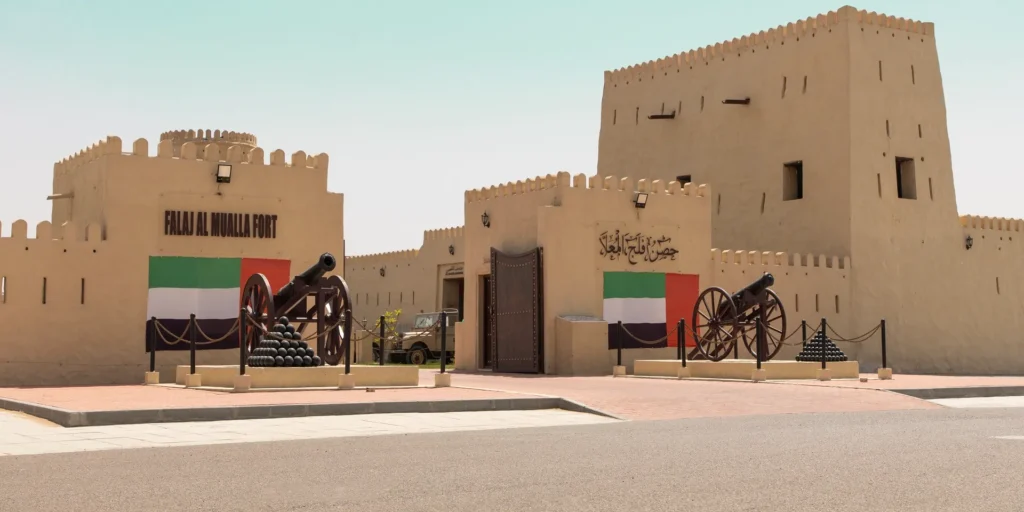
About 50 kilometers inland, the Falaj Al Mualla Fort transports visitors to a rural landscape surrounded by date palms and irrigation channels. Built in 1825, it stands as a symbol of Umm Al Quwain’s agricultural and tribal heritage.
🏰 What Awaits Inside
The fort hosts a permanent museum showcasing:
- Historic Firearms & Tools used by local tribes
- Ancient Irrigation Models showing how the falaj (underground water system) sustained farms
- Reconstructed Living Quarters with period furniture and utensils
The site is especially picturesque at sunset, with the ochre-colored walls glowing against desert hues. It’s an essential stop for those who want to experience museums in Umm Al Quwain beyond the coastal city.
4️⃣ Ed-Dur Archaeological Site – Ancient Civilization Unearthed
No discussion of museums in Umm Al Quwain is complete without mentioning Ed-Dur, one of Arabia’s most important archaeological sites. Located near Al Dour Beach, it flourished between the 1st century BCE and 3rd century CE.
🏛 Historical Significance
Excavations have uncovered:
- Sun Temples and Stone Tombs
- Roman and Indian Pottery
- Bronze Coins bearing the name “Abiel”
- Glass and Shell Jewelry
Although Ed-Dur itself is an open archaeological area, many of its treasures are displayed within the UAQ National Museum. The site’s ongoing research collaboration with the French Archaeological Mission ensures continuous discovery.
Visiting Ed-Dur offers context to all museums in Umm Al Quwain — it’s the origin of much of what they display.
5️⃣ Local Heritage & Craft Exhibitions – Living Culture
The cultural soul of Umm Al Quwain doesn’t reside only within museum walls. The emirate frequently hosts pop-up heritage events, workshops, and exhibitions at public spaces and souqs.
🎭 Highlights
- Traditional Handicrafts Exhibits: Weaving, pottery, and palm-frond basketry.
- Pearl Diving Demonstrations: Showcasing tools and oral histories.
- Photography Displays: Featuring vintage photos of fishermen, falconers, and desert caravans.
- Women’s Heritage Center Events: Focused on Emirati dress, perfumes, and crafts.
These dynamic exhibitions expand the scope of museums in Umm Al Quwain, bringing history alive through participation rather than observation.
6️⃣ Comparative Context: Northern Emirates’ Heritage Network
When viewed alongside neighboring emirates, the museums in Umm Al Quwain may seem smaller, but they offer a distinct authenticity unmatched elsewhere.
- Sharjah Museum of Islamic Civilization houses vast global collections, but Umm Al Quwain’s exhibits feel deeply personal.
- Ajman Museum, located in an 18th-century fort, mirrors the architectural charm of Al Ali Fort, yet Umm Al Quwain’s museum focuses more on maritime life.
- Ras Al Khaimah National Museum offers broader archaeological content, while UAQ’s collections are rooted in its own soil, offering a more intimate narrative.
This comparative lens shows that the museums in Umm Al Quwain play a vital role in balancing UAE’s national cultural tapestry — humble in scale, rich in soul.
7️⃣ Visitor Tips: Making the Most of Your Museum Experience
To fully enjoy museums in Umm Al Quwain, plan ahead and immerse yourself in the emirate’s rhythm.
🗓 Best Season
Visit between October and April, when the weather is ideal for exploring outdoor sites like Ed-Dur or Falaj Al Mualla.
🚗 Getting Around
The emirate is compact — most museums are within a 15–20 minute drive from the center. Taxis and car rentals are the easiest ways to get around.
📷 Photography
Most museums allow non-flash photography. Always ask for permission before photographing staff or other visitors.
🛍 Souvenir Tip
Don’t miss small heritage shops near the UAQ National Museum offering handwoven mats, incense, and pearl jewelry — authentic keepsakes representing local artistry.
🍴 Where to Eat Nearby
After exploring, visit seaside cafes like Al Sinniyah Café or Emirates Sea Restaurant — both near the museum district — for Emirati and seafood dishes.
💡 Insider Suggestion
Ask the museum guide to show you the “hidden” storage rooms or restoration labs. These behind-the-scenes tours offer a glimpse into conservation work rarely seen by the public.
8️⃣ Why Museums in Umm Al Quwain Matter in 2025
🏛 Preserving a Vanishing Way of Life
The museums in Umm Al Quwain safeguard a culture rapidly evolving amid modernization. They document fishing, pearling, and farming traditions that once defined Emirati life before oil wealth.
🌍 Global Relevance
With growing academic collaboration and digitization projects, the emirate’s museums contribute valuable data to international archaeological studies — especially regarding early trade across the Arabian Gulf.
👩🏫 Educational Role
These museums serve as living classrooms for UAE students and tourists alike. Their focus on experiential learning makes them essential to the country’s cultural education framework.
🌟 Sustainable Tourism
The government’s 2025 cultural strategy includes developing heritage-based tourism that supports conservation while empowering local communities. The museums in Umm Al Quwain are at the forefront of this movement.
🧭 A Legacy for the Future
Ultimately, these institutions are not relics of the past — they are active custodians ensuring that Umm Al Quwain’s stories inspire generations to come.
🕌 Conclusion: Journey Through Time, Heart, and Heritage
Visiting the museums in Umm Al Quwain in 2025 is more than a historical tour — it’s a soulful journey through the heart of Emirati identity. Each fort, artifact, and exhibit echoes centuries of resilience, trade, and artistry.
Start at the iconic Al Ali Fort, trace the ancient relics of Ed-Dur, stroll through Falaj Al Mualla’s peaceful courtyards, and end your trip at a local crafts fair under the desert sun. Whether you’re an academic, a curious traveler, or a family seeking cultural enrichment, these museums transform quiet discovery into lifelong memory.
🔗 External Resources & References (Updated 2025)
- Umm Al Quwain National Museum – Visit UAQ
- Umm Al Quwain Antiquities Center – UAQ Government Site
- TripAdvisor: UAQ National Museum Reviews
- Bayut Guide to Umm Al Quwain Museum
Also Read: List of 5 Must-Visit Destinations in Umm Al Quwain