🛳 Introduction
In 2025, Fujairah Port is more than a maritime hub—it is a symbol of the UAE’s rise as a resilient global energy and logistics power. Located on the country’s east coast outside the Strait of Hormuz, the port has become a lifeline for oil exports, marine fuel trade, and diversified cargo operations. Unlike Jebel Ali Port in Dubai, which is famous for container handling, Fujairah Port has carved out its niche as an oil and energy trade powerhouse.
With growing global demand for stable energy supplies, and as the shipping industry transitions to greener fuels, Fujairah Port plays a dual role: securing the UAE’s energy exports and adapting to international climate goals. Let’s break down the journey, capabilities, and outlook of this vital trade gateway.
1️⃣ Strategic Location & Historical Background
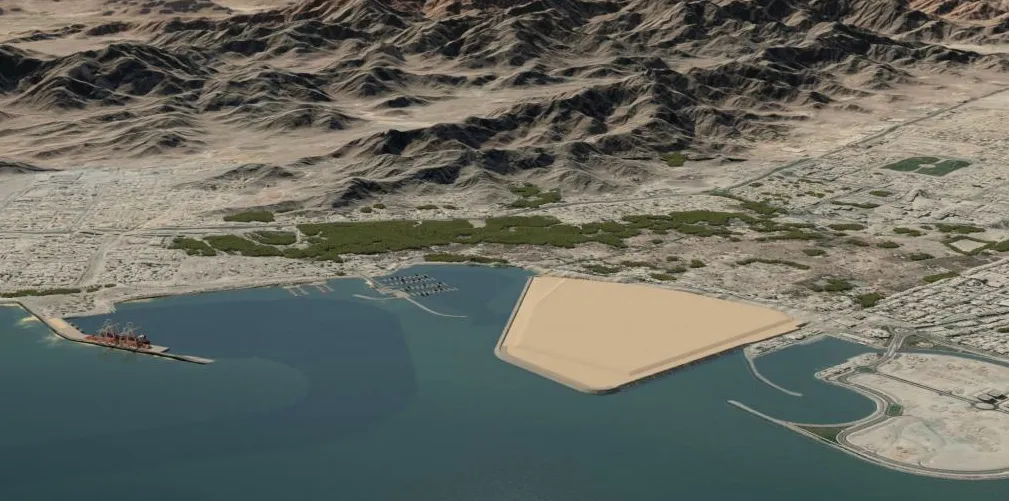
- Unique Geography: Nestled on the Gulf of Oman, Fujairah Port avoids the chokepoint risks of the Strait of Hormuz. This positioning makes it indispensable for shipping firms that prefer safer, faster routes.
- Timeline: Construction began in the late 1970s as part of the UAE’s diversification push. By 1983, it was fully operational with bulk and container facilities. Over the decades, expansions kept pace with the oil trade and global shipping needs.
- Pipeline Security: The Habshan–Fujairah pipeline (370 km long) pumps oil from Abu Dhabi’s fields directly to the port. It can transport 1.5 million barrels per day, insulating exports from geopolitical risks.
👉 Unlike many Gulf ports, Fujairah Port is not only a shipping center but also a strategic insurance policy for the UAE’s oil economy.
2️⃣ Port Infrastructure & Facilities
Fujairah Port is known for its state-of-the-art, multi-purpose infrastructure:
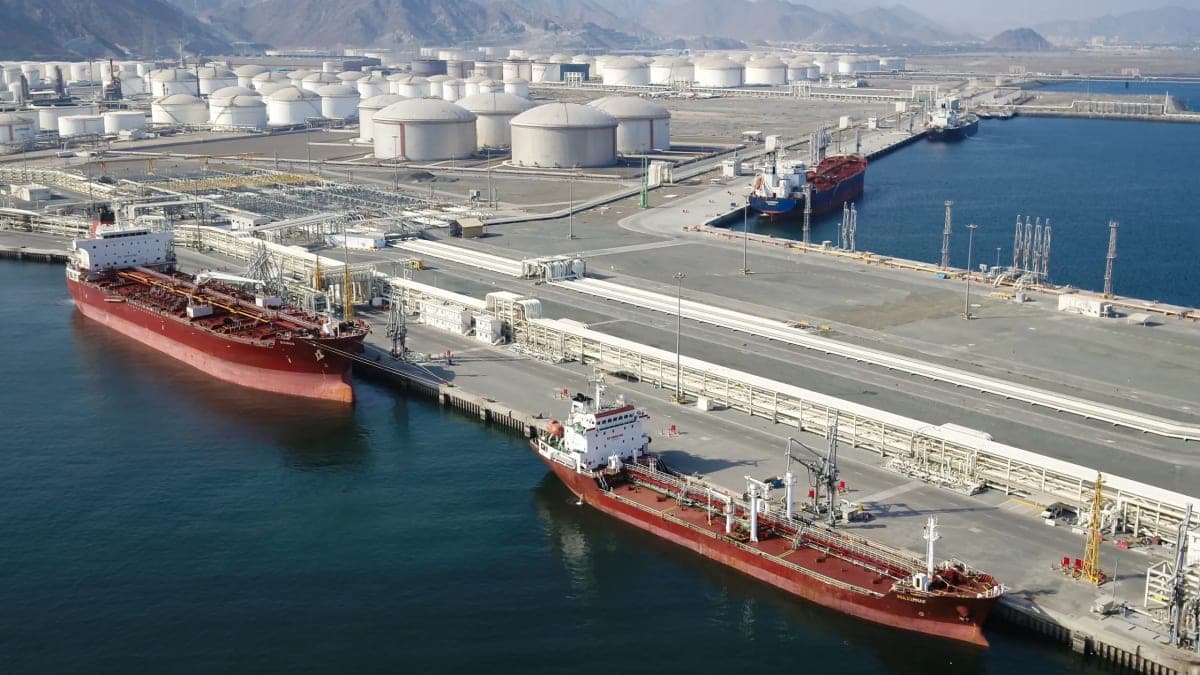
- Berths & Terminals: The port has over 25 berths capable of handling VLCCs (Very Large Crude Carriers). These include dedicated oil berths, general cargo, dry bulk berths, and container handling terminals.
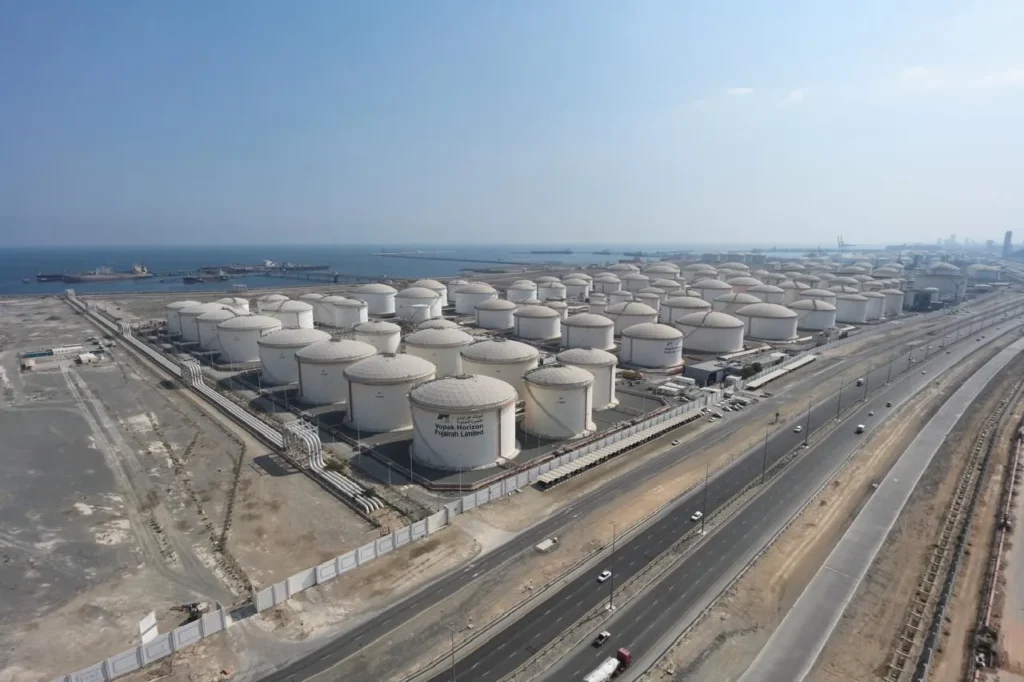
- Storage: The Fujairah Oil Industry Zone (FOIZ) provides more than 13 million cubic meters of storage capacity for crude oil and refined products, making it one of the largest oil storage hubs in the world.
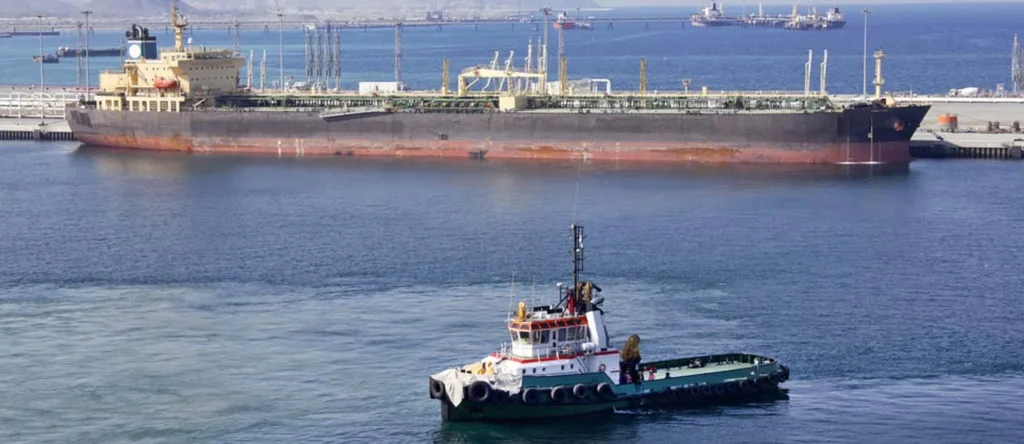
- Marine Services: Ship repair yards, bunkering facilities, offshore anchorages, and towage services support vessels around the clock.
📌 This infrastructure makes Fujairah Port a one-stop destination for global shipping companies—whether for refueling, repairing, or exporting cargo.
3️⃣ Oil, Bunkering & Trade Volumes
Oil remains the heartbeat of Fujairah Port.
- Bunker Market: It is among the top three global bunkering hubs, alongside Singapore and Rotterdam. Ships from Asia, Europe, and Africa stop here to refuel.
- Fuel Trends 2025: In H1 2025, bunker sales dipped 5% year-on-year, but demand for high-sulphur fuel oils surged again in Q3, showing the market’s resilience.
- Stockpile Data: FOIZ records show oil product stockpiles rising steadily through 2025. Imports of fuel oil and exports of gasoline and gasoil continue to grow, with Pakistan, Saudi Arabia, and East Africa being major markets.
- Diversified Commodities: Beyond oil, Fujairah Port handles aggregates, coal, wheat, cement, and containerized trade—supporting regional construction and manufacturing.
📊 In numbers: over 3,000 ships call at Fujairah Port annually, making it one of the busiest oil hubs worldwide.
4️⃣ Strategic & Security Significance
- Bypassing Hormuz: Over 40% of global oil exports pass near the Strait of Hormuz, a geopolitical hotspot. Fujairah Port allows the UAE to ship crude without exposure to this risk.
- Energy Security Role: For global markets, it ensures steady supply chains even during regional flare-ups. For the UAE, it safeguards national economic interests.
- Navy & Defense: The UAE Navy and allied forces frequently patrol around Fujairah Port to secure shipping lanes. This military presence enhances trust among global shippers.
⚓ Simply put, Fujairah Port is not just a commercial asset—it is a strategic shield for global energy stability.
5️⃣ Environmental Initiatives & Clean Fuel Transition
Sustainability is no longer optional—it’s central to Fujairah Port’s strategy.
- Bio-Bunkering: In March 2025, the port delivered its first bio-bunker blend (B24), showing readiness for decarbonized shipping fuels.
- Compliance with IMO 2020 & Beyond: Fujairah Port ensures supplies of very low sulphur fuel oil (VLSFO) and marine gasoil (MGO) to meet International Maritime Organization regulations.
- Future Fuels: Port authorities are exploring LNG, methanol, and ammonia bunkering infrastructure to keep pace with global shipping transitions.
- Eco-friendly Practices: Waste management, oil spill control, and energy-efficient port operations are being implemented to align with the UAE’s Net Zero by 2050 strategy.
🌍 With these steps, Fujairah Port is rebranding itself from a fossil-fuel hub to a cleaner energy corridor.
6️⃣ Economic & Trade Diversification
While oil dominates, Fujairah Port is broadening its portfolio.
- Cargo Handling: Cement, grains, iron ore, and containers are key commodities. The port’s dry bulk terminal has a capacity exceeding 18 million tonnes annually.
- Regional Construction Supply: The port is a top exporter of crushed rock and aggregates to countries like India, Qatar, and Bangladesh—feeding their massive infrastructure projects.
- Industrial Ecosystem: FOIZ and Fujairah Free Zone attract foreign investors in logistics, petrochemicals, and light industries, further linking port activity with regional development.
📈 This diversification ensures Fujairah Port is resilient even during oil market downturns.
7️⃣ Recent Trends & Challenges
- Bunker Market Volatility: Marine fuel sales in 2025 highlight global shifts—demand falling during economic slowdowns but bouncing back with regional shipping booms.
- Geopolitical Risks: Tensions between Iran, the US, and the Gulf states still pose indirect threats, raising insurance premiums for vessels near the region.
- Competition: While Singapore remains the leader, Fujairah Port is competing strongly by offering cheaper turnaround times and proximity to key Asia-Europe shipping lanes.
- Regulatory Costs: Compliance with stricter IMO emission rules raises operational expenses for bunker suppliers, testing the adaptability of Fujairah Port’s ecosystem.
⚠️ Despite these challenges, the port’s diversified revenue model cushions its growth.
8️⃣ Future Outlook & Expansion Plans
Looking ahead, Fujairah Port is on a growth trajectory.
- Storage Expansion: FOIZ aims to cross 15 million cubic meters of storage capacity by 2027, reinforcing its status as a global oil hub.
- Digitalization: Smart logistics systems and blockchain-based cargo tracking are being piloted to enhance efficiency.
- Green Future: Plans are underway to establish green bunkering corridors, positioning Fujairah Port as the Middle East’s hub for biofuels and possibly hydrogen trade.
- Global Partnerships: Collaborations with Asian refiners, European shipping firms, and African importers are strengthening trade networks.
🚀 By 2030, Fujairah Port could well emerge as the world’s leading energy trade port, rivaling even Rotterdam and Singapore.
✅ Conclusion
As of 2025, Fujairah Port is more than just a UAE port—it is a global energy lifeline. With its unique location outside the Strait of Hormuz, vast oil storage facilities, diversified trade activities, and forward-looking environmental policies, the port has cemented its role as the UAE’s oil and trade gateway.
The challenges of bunker market volatility, competition, and regulatory shifts remain. Yet, its strategic significance, coupled with bold investments in green fuels and digitalization, ensures that Fujairah Port will continue shaping global energy and maritime trade for decades to come.
🔗 External Links
- Port of Fujairah — Official Website
- Reuters — UAE’s Fujairah 2025 Bunker Sales
- S&P Global — Fujairah Oil Stockpiles Report
- Reuters — Bio-Bunker Fuel at Fujairah
Also Read: The Cost of Living in Fujairah vs. Other Emirates — An Affordable Choice in 2025