1️⃣ Introduction
Once a barren outcrop in the Arabian Gulf, Sir Bani Yas is now famous for its thriving wildlife reserve and the remarkable diversity of plants on Sir Bani Yas Island. Thanks to decades of visionary conservation, several million trees and shrubs now create shade, food, and shelter for animals and visitors alike.
Understanding the most common plants on Sir Bani Yas Island helps travellers appreciate how carefully designed planting has transformed this landscape from harsh desert to living laboratory. For families, nature lovers, and photographers, learning about the plants on Sir Bani Yas Island turns every game drive, guided walk, or kayak trip into a botanic safari filled with small details and big stories. Many guests are surprised to find savanna-style clearings, shaded groves, and coastal thickets all on a single island, proof of how successful the greening project has been.
2️⃣ A living laboratory: how vegetation reshaped the island
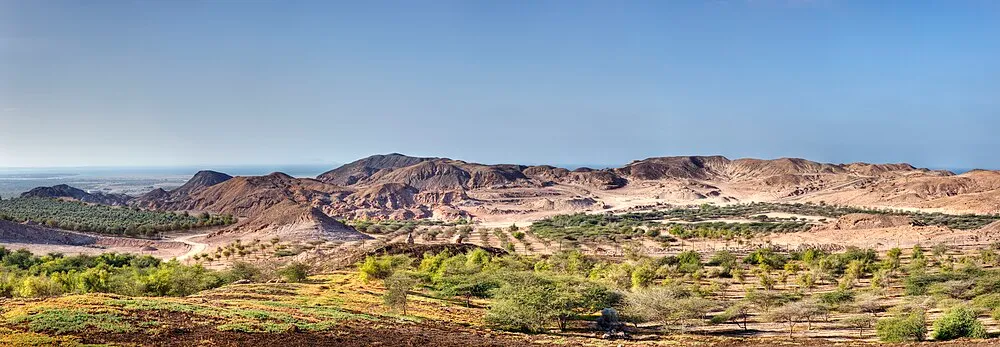
The story of plants on Sir Bani Yas Island began in the late twentieth century, when large-scale greening programmes were launched to create a safe habitat for endangered Arabian species. Conservation teams installed extensive irrigation systems and tested hardy native and introduced trees to see which ones could tolerate high heat, salty soils, and very low rainfall.
Over time, the most successful plants on Sir Bani Yas Island were used in larger numbers, creating belts of woodland, pockets of farmland, coastal mangrove stands, and shady resting spots for wildlife. Today, these carefully chosen plants on Sir Bani Yas Island stabilise the soil, cool the air, and provide natural corridors so that oryx, gazelles, and other animals can move safely across the reserve. Satellite and aerial images now show wide green bands in areas that were once bare rock and sand, a powerful visual record of long-term ecological restoration.
3️⃣ Ghaf and other native desert trees
Among the most iconic plants on Sir Bani Yas Island is the ghaf tree, the national tree of the United Arab Emirates. Ghaf is celebrated across the country for its deep roots and high drought tolerance, staying green even in long dry seasons while offering shade and browse for animals.
On Sir Bani Yas, ghaf grows alongside other hardy desert trees in carefully planned groves that echo natural woodlands of the Arabian interior. In several areas, native plants on Sir Bani Yas Island, such as ghaf and sidr, are grouped to create sheltered microclimates where young saplings can establish with less stress. For wildlife, these shade-giving plants on Sir Bani Yas Island are essential rest stops during the hottest hours, and rangers often point out oryx or sand gazelles resting beneath their spreading crowns.
4️⃣ Mangroves and coastal greenery
Along the shoreline, one of the most distinctive groups of plants on Sir Bani Yas Island is the mangrove community. Abu Dhabi coasts are dominated by the grey mangrove Avicennia marina, a salt-tolerant evergreen that forms dense thickets along sheltered bays, and this hardy species also underpins many mangrove stands around the island.
As they spread, mangrove stands and other coastal plants on Sir Bani Yas Island now protect the shore from erosion, store blue carbon, and create nurseries for fish, crabs, and invertebrates. At low tide, visitors can see exposed roots acting as natural breakwaters that slow waves and trap sediment, gradually building rich, dark soils. Guest planting days invite visitors to add new seedlings to the line of blue-green plants on Sir Bani Yas Island, strengthening natural sea defences and supporting bird life such as herons and flamingos each year.
5️⃣ Date palms and productive groves
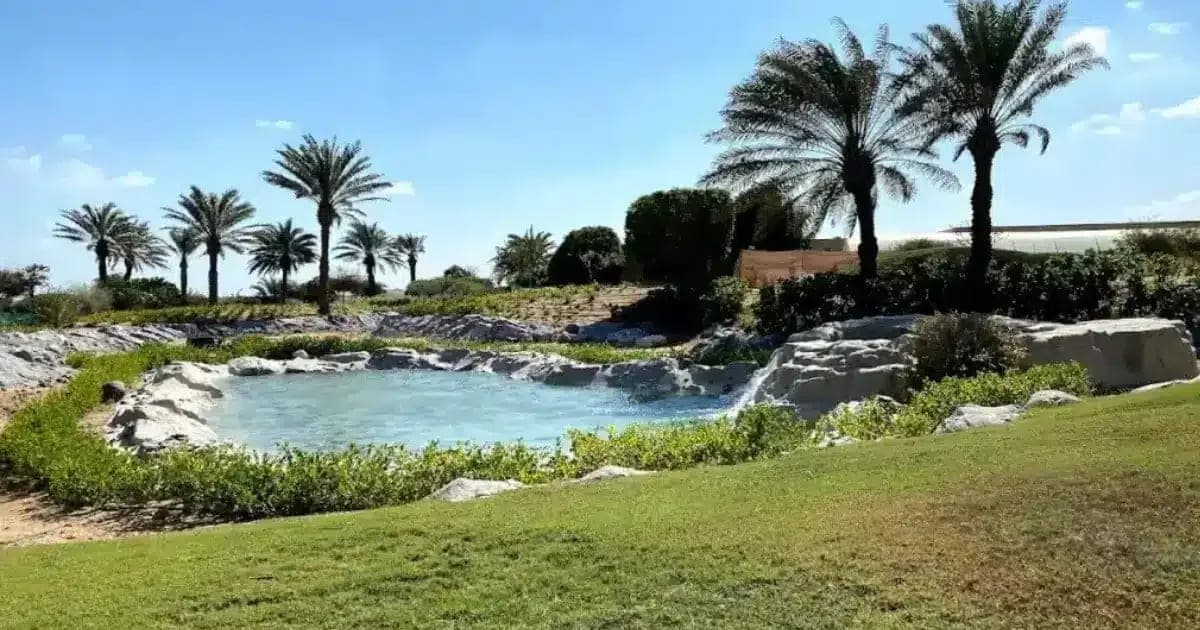
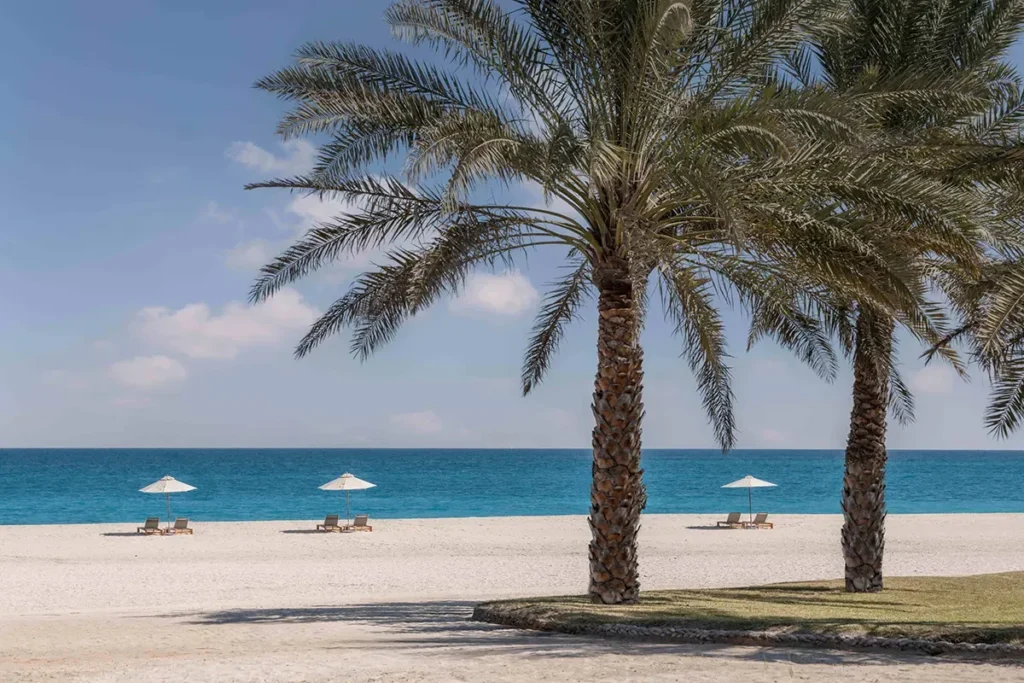
When travellers think about plants on Sir Bani Yas Island, date palms often come to mind. Palm groves reflect the agricultural heritage of the wider region, where date cultivation has long been central to food security and oasis life. On the island, palms appear both in landscaped areas near resorts and within wildlife zones, where they punctuate open clearings with tall, textured trunks and wide crowns.
These tall, resilient plants on Sir Bani Yas Island reduce wind speed at ground level and lower temperatures beneath their shade, creating comfortable places for animals and people. Under their filtered light, smaller shrubs and herbs can grow with less water stress, turning palm areas into layered habitats. Because so many paths and viewpoints pass under their crowns, the palms have become some of the most recognisable plants on Sir Bani Yas Island for returning guests, symbolising the island’s surprising transformation into a green oasis.
6️⃣ Miswak toothbrush tree and traditional knowledge
Another distinctive member of the community of plants on Sir Bani Yas Island is the miswak or toothbrush tree, Salvadora persica. Across Arabia, its twigs have been used for centuries as natural toothbrushes, and its roots and leaves also appear in traditional remedies. On Sir Bani Yas, groves of miswak were planted to honour this heritage while supplying shade and fodder in more arid corners of the reserve.
Groves of miswak were added to the palette of plants on Sir Bani Yas Island because they meet both cultural and ecological goals, offering food for antelope and shelter for birds. Their dense foliage, together with other shrub-sized plants on Sir Bani Yas Island, creates natural windbreaks and green screens around some animal feeding areas. Educational talks and displays often highlight miswak as an example of how traditional knowledge influenced the choice of species during the island’s restoration, linking culture and conservation in a very practical way.
7️⃣ Acacia and sidr trees for shade and fodder
Acacia species, especially the umbrella thorn acacia Vachellia tortilis, are vital plants on Sir Bani Yas Island. Their flat, spreading crowns create the classic savanna style silhouette that many visitors associate with wildlife destinations, and their tiny leaves and long roots allow them to cope with intense sun and low rainfall. Field reports confirm that Vachellia tortilis has been established successfully on the island as part of broader conservation and rewilding efforts.
In browsing zones, these drought-tolerant plants on Sir Bani Yas Island provide pods, leaves, and small branches that many herbivores depend on throughout the year. In some areas, they are complemented by Ziziphus spina christi, the sidr tree, whose nutritious fruits and dense canopies add even more variety to the diet of birds and mammals. Mixed stands of acacia and sidr trees are among the toughest plants on Sir Bani Yas Island, holding slopes in place, framing sweeping safari views, and showcasing how desert-adapted woodlands can flourish with intelligent water management.
8️⃣ Conservation, research, and the future of island vegetation
Modern conservation projects place strong emphasis on long-term monitoring of plants on Sir Bani Yas Island. Botanists and ecologists track survival rates, growth patterns, and water use to ensure that each area contains a suitable blend of native and carefully selected naturalised species. The aim is to support both wildlife and landscape aesthetics without wasting precious freshwater resources.
As climate research advances, managers adjust which plants on Sir Bani Yas Island they favour in new planting zones, with particular attention given to ghaf, acacia, and mangroves that store significant carbon and cope well with heat and salinity. Visitor programmes and community outreach now encourage guests to see themselves as partners in this process, whether through mangrove planting days, guided nature walks, or educational workshops. Together, these efforts keep the vegetation dynamic and resilient, ensuring that wildlife continues to thrive as conditions in the wider Gulf region change.
9️⃣ Conclusion
The transformation of Sir Bani Yas into a lush sanctuary shows how patient planning and smart species selection can bring life back to even the harshest environments. From mangroves and ghaf to palms, miswak, and acacia, the island’s common plants have been chosen for their ability to withstand heat, salinity, and strong winds while providing food and shelter for endangered animals.
Learning to recognise these plants adds depth to every safari drive, hiking trail and kayak route, turning a simple outing into a deeper understanding of desert ecology. As conservation teams keep refining planting strategies, focusing on drought-resistant and high-value native species, Sir Bani Yas is likely to remain one of the region’s most inspiring examples of large-scale nature restoration and nature-based tourism working hand in hand.
References
- Environment Agency Abu Dhabi – Sir Bani Yas Island EAD
- Khaleej Times – Sir Bani Yas, the most wonderful story of eco tourism Khaleej Times
- National Geographic – Sir Bani Yas Island, United Arab Emirates National Geographic
- Gulf News – Plant a mangrove tree on your Sir Bani Yas Island trip Gulf News
- Saudi Aramco World – Rx for Oryx
- Anantara – From extinction to the wild, a conservation success story at Sir Bani Yas
Also Read: Short Walking Trails on Sir Bani Yas Island for Nature-Loving Visitors: An Ultimate Guide in 2025