

🛣️ 1. Introduction: The Future of Mobility — New Roads in Dubai Leading the Way
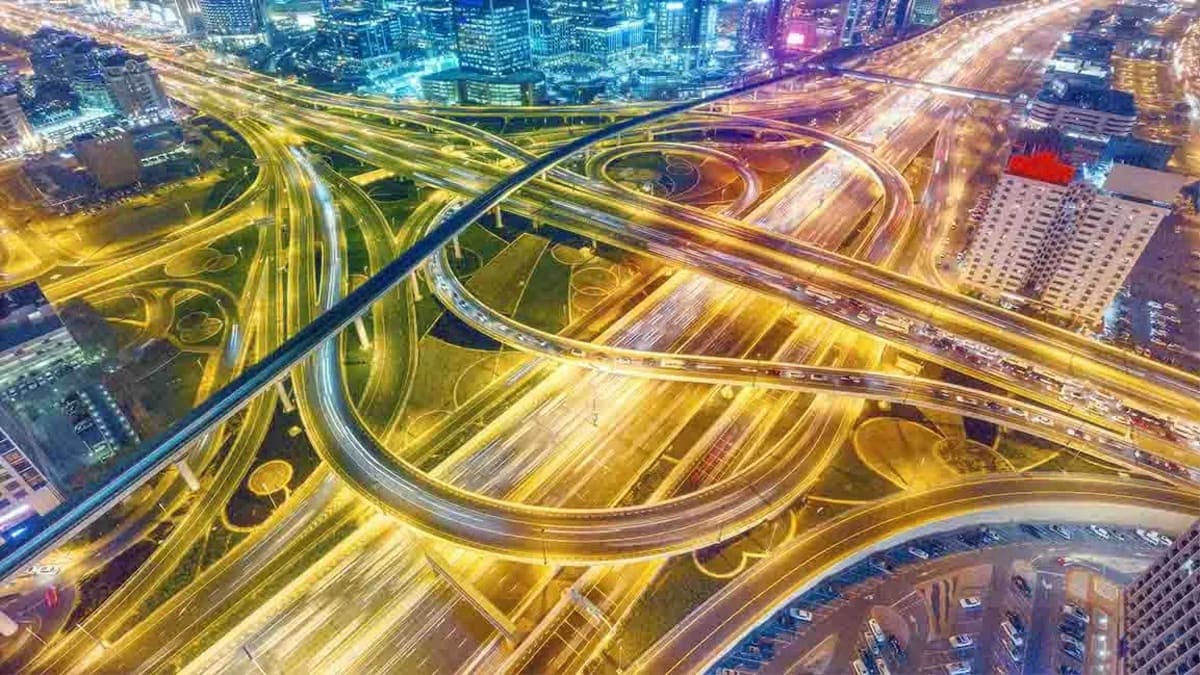
Dubai’s rapid urban expansion, real estate development, and growing population have made transportation infrastructure a top priority for city planners. To meet future demand, the government has launched a strategic vision focused on building new roads in Dubai, upgrading existing highways, and introducing cutting-edge traffic solutions. From bustling residential neighborhoods to emerging commercial zones, the new road projects aim to reduce congestion, connect key districts, and enhance mobility for millions of residents and tourists.
The Roads and Transport Authority (RTA) and other agencies are actively rolling out the Five-Year Internal Roads Plan (2025–2029), which includes dozens of projects targeting the construction of new roads in Dubai. These include expansions in Al Khawaneej, Hessa Street upgrades, improvements to Al Qudra Road, and entirely new highway corridors. With these developments, new roads in Dubai will redefine the way people and goods move across the emirate, bringing unmatched convenience and efficiency.
🛤️ 2. Five-Year Internal Roads Plan (2025–2029)
One of the cornerstone infrastructure initiatives shaping the future of new roads in Dubai is the Five-Year Internal Roads Plan (2025–2029). This ambitious plan involves the development of 634 kilometers of internal road networks across 12 residential, commercial, and industrial areas. With a massive budget of AED 3.7 billion, the initiative directly addresses the city’s rapidly growing population and evolving mobility demands.
This plan is a vital component of the broader strategy to expand new roads in Dubai and support areas where urbanization rates range from 30% to 80%. By targeting both established and emerging districts, the initiative ensures balanced infrastructure growth across the emirate.
📌 Key Highlights of the Plan:
- Nad El Sheba 3 and Al Amardi: Internal road projects supporting the Mohammed bin Rashid Housing Establishment, aligning with the vision for sustainable new roads in Dubai.
- Hatta: Introduction of new internal roadways to serve newly constructed housing units, further expanding the network of new roads in Dubai in the outer regions.
- Al Awir 1 and Nadd Hessa: Development of 92 km of internal roads scheduled for 2026, part of the larger blueprint of new roads in Dubai to serve residential corridors.
- Al Athbah, Mushrif, and Warsan 3: Planned construction of 59 km of new internal roads in 2027, reinforcing community access through new roads in Dubai.
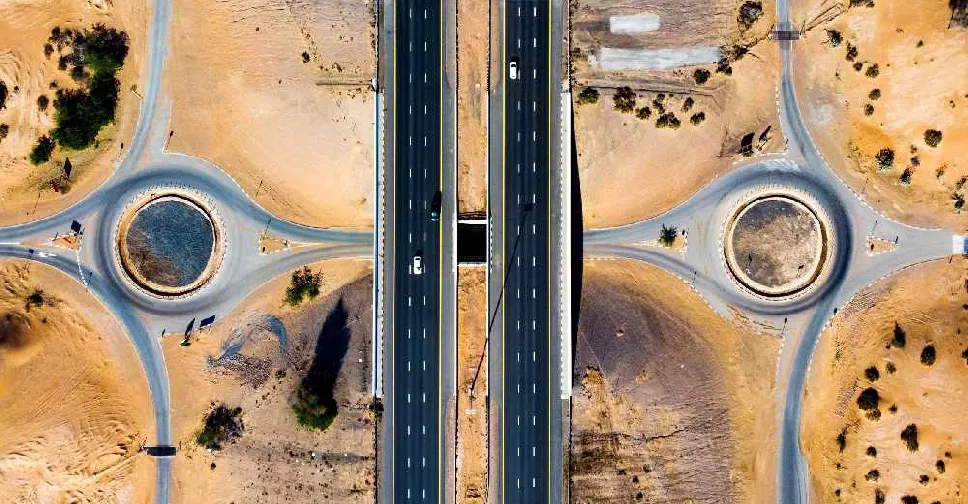
- Al Awir 1, Wadi Al Amardi, and Hind 3: One of the largest phases, with 284 km of roads planned for 2028, represents a significant leap in expanding new roads in Dubai across the desert outskirts.
- Hind 4 and Al Yalayis 5: Development of 200 km of internal roads scheduled for 2029, reinforcing Dubai’s commitment to long-term investment in new roads in Dubai.
These developments are not merely structural additions—they are transformative projects that enhance accessibility, reduce travel time, and improve traffic safety. The Five-Year Internal Roads Plan is key in creating smart, sustainable, and inclusive new roads in Dubai. Significantly improve accessibility and traffic flow in various parts of Dubai.
🛣️ 3. Strategic Road Corridors and Major Projects
The RTA’s 2025–2027 plan includes 57 initiatives featuring the construction of 226 kilometers of roads and 115 bridges and tunnels. These projects are designed to support the growing population and enhance mobility across the emirate.
Notable Projects:
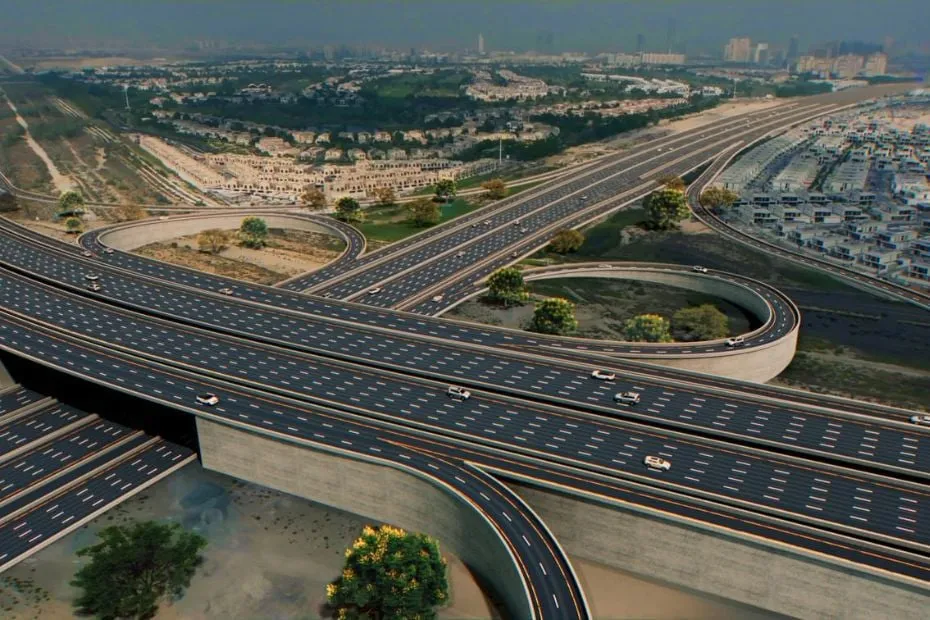
- Umm Suqeim–Al Qudra Corridor: A 16 km corridor serving over one million residents, with upgrades to four key junctions and construction of bridges and tunnels totaling 7,000 meters. Travel time is expected to reduce from 46 minutes to just 11.
- Hessa Street Upgrade: Enhancement of four intersections through constructing 9,000 meters of bridges, doubling the road’s capacity from 4,000 to 8,000 vehicles per hour and reducing travel time from 30 minutes to seven.
- Al Fay Road Corridor: An extension of Al Khail Road, running from its junction with Sheikh Mohammed Bin Zayed Road through Sheikh Zayed Bin Hamdan Al Nahyan Street to Emirates Road. The project includes 12,900 meters of road construction and the development of five intersections.
- Latifa bint Hamdan Street Development: Covers 12,200 meters from its intersection with Al Khail Road to Emirates Road, adding capacity for approximately 16,000 vehicles per hour in both directions.
- Al Mustaqbal Street and Trade Centre Roundabout: Development includes the construction of bridges and tunnels totaling 6,200 meters, enhancing traffic flow in the area.
These strategic corridors are integral to improving the overall traffic infrastructure and ensuring smoother commutes for residents and visitors.
🚧 4. Enhancements to Existing Roads and Intersections
In addition to constructing new roads in Dubai, the RTA is also focused on upgrading existing roads and intersections to improve traffic efficiency.
Key Upgrades:
- Sheikh Zayed Road: Expansion of the service road adjacent to Financial Centre Metro Station, increasing the number of lanes from three to four, boosting road capacity by 25%, and reducing journey time from five minutes to two.
- Oud Metha and Al Asayel Streets: Construction of four main intersections, 4,300 meters of bridges, and 14 km of roads to accommodate increased traffic capacity.
- Umm Suqeim Street Improvement: Upgrading a 4.6 km stretch from Al Khail Road to Sheikh Mohammed bin Zayed Road, including the construction of an 800-meter tunnel with four lanes in each direction.
These enhancements are aimed at reducing congestion and improving safety on some of Dubai’s busiest roads.
🛤️ 5. Sustainable and Smart Mobility Initiatives
Dubai’s vision for its transportation infrastructure extends beyond just building new roads in Dubai. The emirate is also investing in sustainable and smart mobility solutions to future-proof its transport network.
Initiatives:
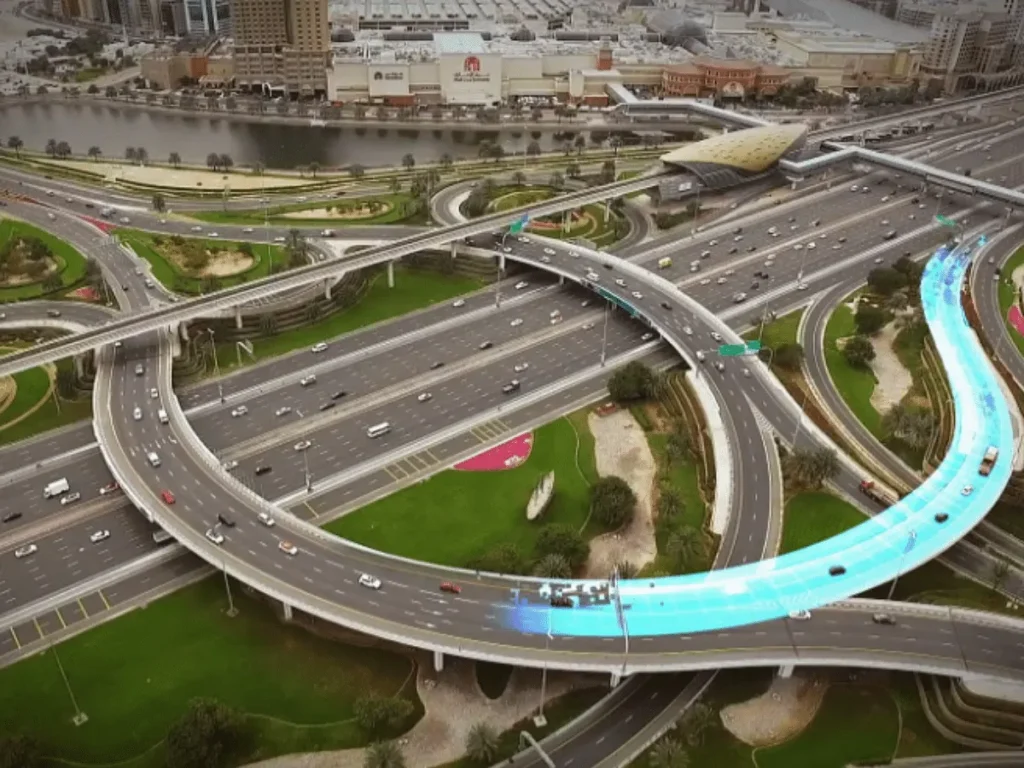
- Trackless Tram Systems: Deployment of trackless trams at eight locations across Dubai, operating on virtual tracks using camera-guided painted lines on dedicated lanes. Each tram has three carriages and is powered by electricity.
- Dedicated Bus and Taxi Lanes: Addition of 13 km of dedicated lanes to improve bus arrival rates by 42%.
- Smart Cycling Tracks Scanning: Implementation of technology to monitor and maintain cycling tracks.
- Green Road Safe Driving System: A system that alerts drivers of public transport buses in real time about traffic safety breaches.
These initiatives reflect Dubai’s commitment to integrating technology and sustainability into its transportation planning.
🏗️ 6. Community Access and Internal Road Projects
Improving access within communities is a key focus of the RTA’s plans for new roads in Dubai. Several projects are underway to enhance internal roads and provide better connectivity for residents.
Projects:
- Al Awir 1: Construction of 16.5 km of internal roads, including intersections and roundabouts, and adding a lane to Emirates Road, extending from the entrance of Al Awir 1 to Sharjah.
- Nadd Hessa: Provision of an additional entry and exit from Sheikh Mohammed bin Zayed Road and Sheikh Zayed bin Hamdan Al Nahyan Street, with two lanes capable of accommodating 6,000 vehicles per hour.
- Wadi Al Safa 3: Introduction of direct access from Sheikh Mohammed bin Zayed Road for vehicles coming from Dubai–Al Ain Road, including 4 km of internal roads and new entry points.
- Al Warqa’a: Development of new access and exit points from Sheikh Mohammed bin Zayed Road, including improvements across an internal road network spanning eight kilometers.
These projects aim to reduce travel distances and times, enhancing the quality of life for residents.
🛣️ 7. Road Marking and Maintenance Initiatives
Maintaining the quality and safety of existing roads is as important as building new roads in Dubai. The RTA has initiated a comprehensive road marking renewal project across 89 locations in the emirate.
Scope of Work:
- Re-striping of 50 Major Roads: Including Sheikh Zayed bin Hamdan Al Nahyan Street, First Al Khail Road, 2nd December Street, and others.
- Renewal in 39 Residential Areas: Such as Al Awir, Umm Hurair, Oud Al Muteena, Al Twar, Al Barsha, Al Sufouh, and Al Qusais Industrial Area.
- Repainting of Red Surfacing: In speed reduction zones along major corridors.
- Re-marking of Box Junctions: At key intersections, paid parking, and traffic-calming devices like humps.
These efforts are part of the RTA’s 2025 Preventive Maintenance Plan, aimed at maintaining the highest safety standards on Dubai’s roads.
🛣️ 8. Conclusion: Paving the Way for Dubai’s Future
As we look ahead, the implementation of new roads in Dubai is not just a logistical improvement—it’s a transformative step toward a smarter, more sustainable, and better-connected city. These road projects align with Dubai’s long-term urban development and smart mobility strategies, paving the way for reduced commute times, increased accessibility, and improved road safety across all districts.
The emphasis on connectivity, sustainability, and innovation places new roads in Dubai at the heart of the emirate’s evolution. Whether it’s enhancing existing routes like Hessa Street, launching eco-friendly corridors, or creating entirely new road networks in developing areas, each project contributes to a world-class infrastructure blueprint.
With billions of dirhams being invested and construction timelines now active, new roads in Dubai will soon become vital arteries of everyday life, supporting the city’s economy, lifestyle, and future aspirations.
✅ External Links (Cited Sources)
- Dubai Protocol Media Office – Five-Year Internal Roads Plan (2025–2029)
- Gulf Today – Strategic Road Projects Reviewed by Sheikh Hamdan
- RTA Official Portal – Projects and Road Infrastructure Announcements
- Khaleej Times – Dubai’s Hessa Street Expansion to Cut Travel Time
- The National News – Massive Road Projects to Support Dubai’s Urban Growth
Also Read: The Most Developed Areas in Dubai in the Last 5 Years: 2025 Growth Insights