

Introduction
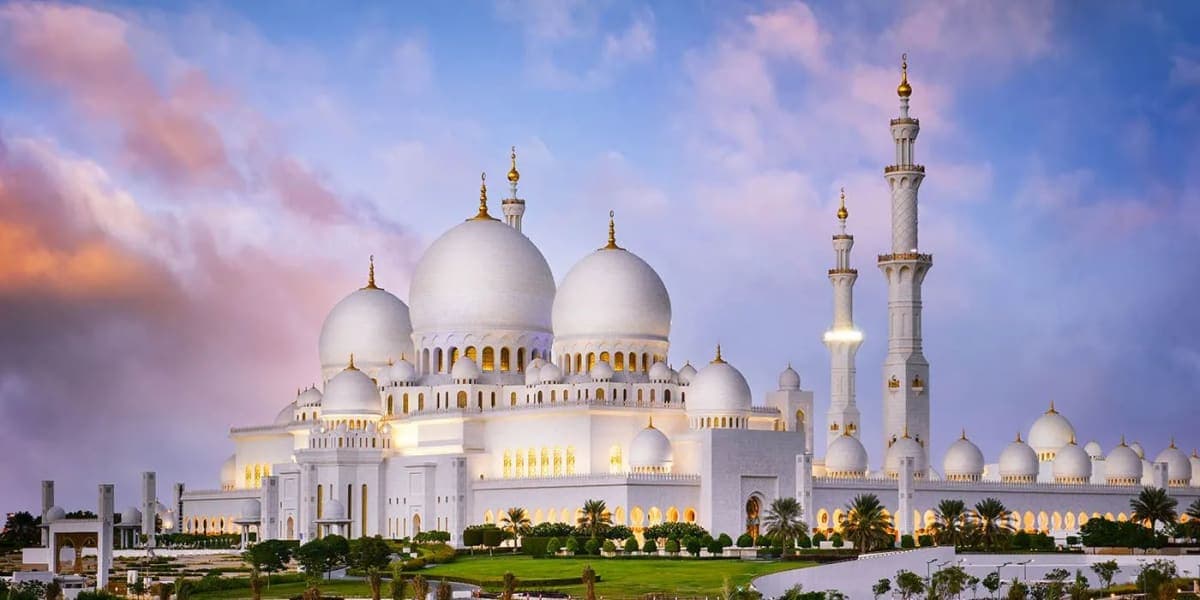
The Sheikh Zayed Grand Mosque is one of the most instantly recognizable landmarks in the United Arab Emirates—an invitation to slow down, reflect, and admire extraordinary craftsmanship at a monumental scale. Built to honor the UAE’s founding father and to serve as a place of worship and cultural exchange, the Sheikh Zayed Grand Mosque draws millions of visitors every year. In 2025, it climbed the global travel rankings and reclaimed its place among the world’s most celebrated attractions, reinforcing its reputation as not just a place of faith but a destination for cultural tourism.
This guide covers everything you need to know — from the mosque’s origin story to the design details that make it unique, plus practical visiting advice, photo tips, and how the mosque fits into an Abu Dhabi itinerary. Whether you’re planning a first visit or revisiting a familiar wonder, this article will help you get the most from your time at the Sheikh Zayed Grand Mosque.
1. 🕰️ History & Origins
- Vision and commissioning (1990s–2007). The construction of the Sheikh Zayed Grand Mosque began in the 1990s and continued for more than a decade, reflecting a vision to create a modern monument inspired by classical Islamic architecture. The late Sheikh Zayed bin Sultan Al Nahyan spearheaded the project as a symbol of tolerance, cultural openness, and national identity. The mosque was officially inaugurated in December 2007.
- A resting place and a legacy. Sheikh Zayed’s involvement in the project was personal; he was buried at the mosque’s courtyard following his death in 2004, giving the site both national and spiritual significance. Over time, the Sheikh Zayed Grand Mosque has evolved into a center for religious life, cultural education, and interfaith engagement, hosting visitors and dignitaries from around the world.
- Cultural diplomacy. From state visits to educational tours, the Sheikh Zayed Grand Mosque has become a recurring backdrop for international dialogue, welcoming leaders, scholars, and travelers who come to witness its scale and learn about its message of unity.
2. 🕌 Design & Architectural Highlights
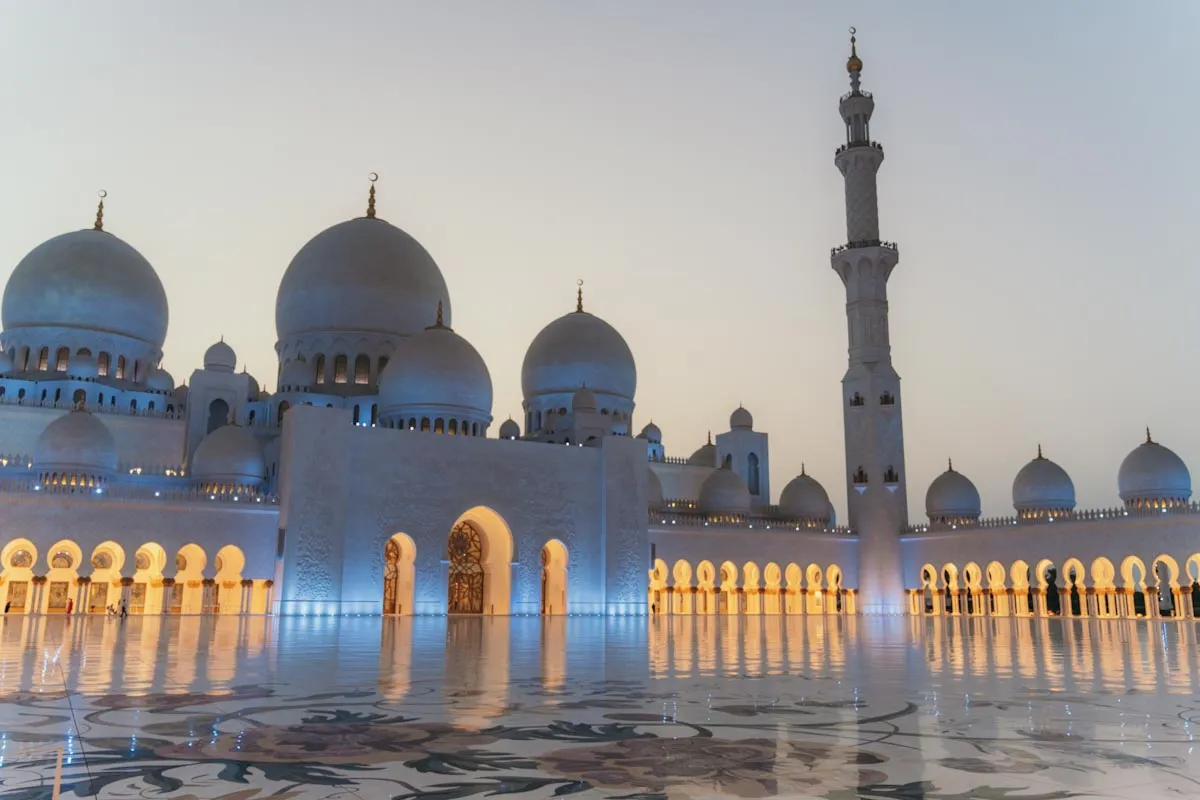
- Scale and layout. The Sheikh Zayed Grand Mosque sits on a sprawling complex that includes open courtyards, prayer halls, and reflecting pools. The complex covers more than 12 hectares and is rotated slightly to align with the Kaaba in Mecca—an architectural choice that places worship practice at the center of the building’s orientation.
- Domes and minarets. The mosque features 82 domes of various sizes and four elegant minarets that punctuate the skyline. These forms reference historical mosque typologies while using contemporary engineering to achieve wide spans and vast interior volumes.
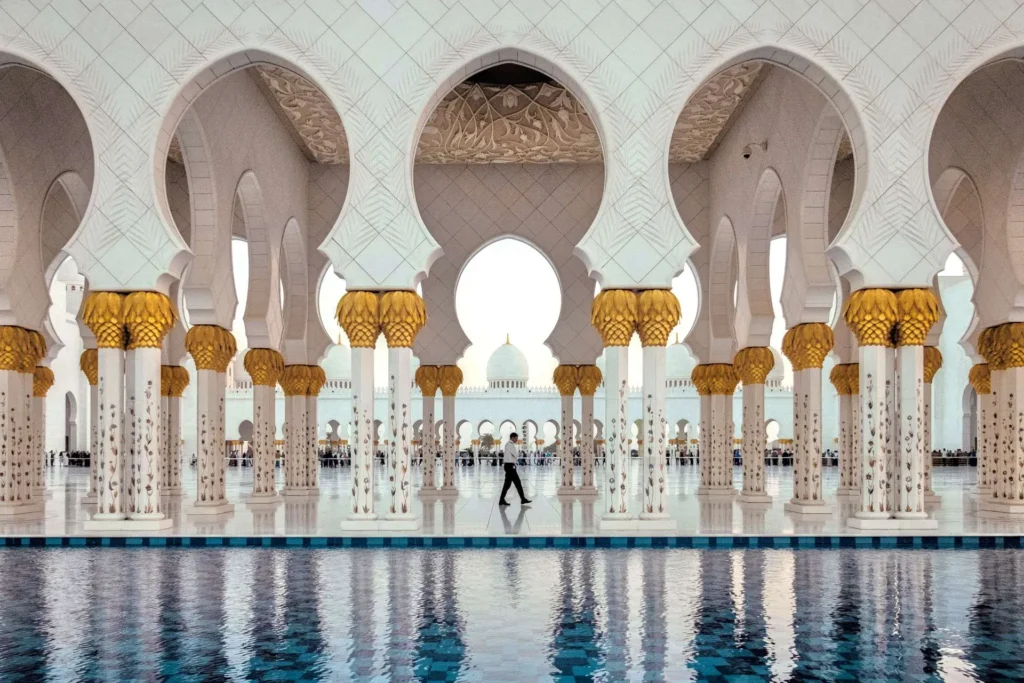
- Marble, inlay, and global materials. One of the mosque’s most famous features is its immaculately white marble cladding. Materials and artisan skills were sourced worldwide—Italy, Greece, Morocco, India, China, Turkey, and Iran all contributed to the mosque’s inlay, mosaics, and stone work, making it a truly global craft collaboration.
- Light as architecture. Thoughtful lighting—both natural and artificial—accentuates the mosque’s forms. The exterior pools reflect columns and domes, while the interior lighting system was designed to echo the phases of the moon, giving the mosque an ethereal quality as daylight fades into evening.
3. ✨ Masterpieces Within — Carpet, Chandeliers & Calligraphy
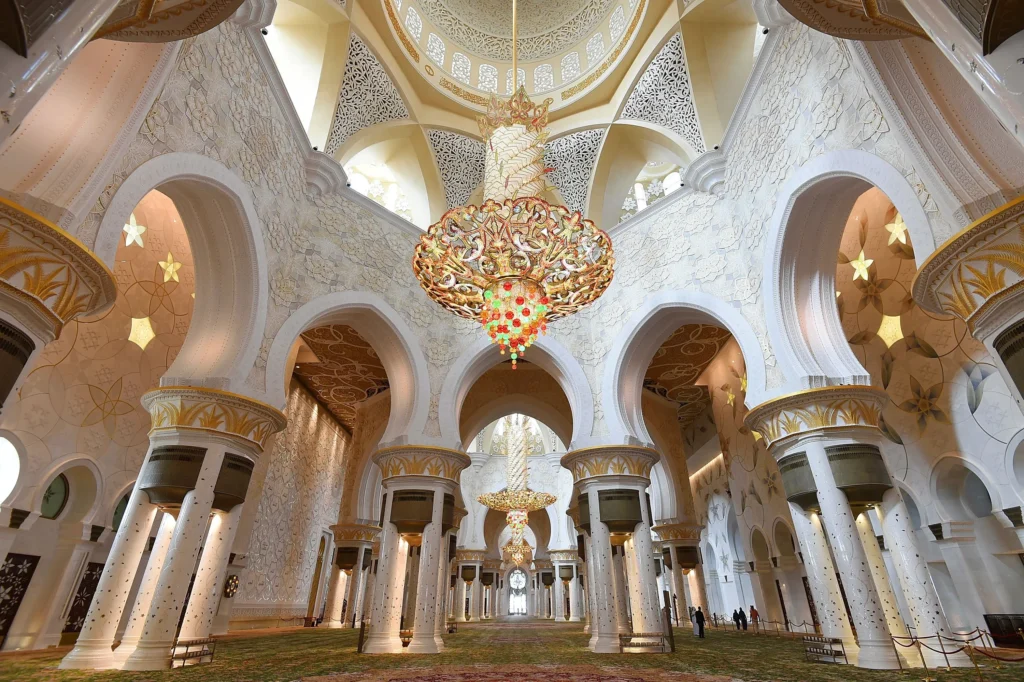
- The world’s largest hand-knotted carpet. The main prayer hall houses the world’s largest hand-knotted carpet, a monumental textile created by thousands of artisans. The carpet dominates the prayer floor and demonstrates a level of detail and scale rarely seen in a single decorative textile.
- Chandeliers of Swarovski and gold. The mosque contains several grand chandeliers featuring millions of crystals and 24-carat gold plating. These chandeliers are not simply lighting fixtures; they are sculptural elements that anchor the space and reflect the mosque’s blend of artistry and engineering.
- Calligraphy and mosaics. Throughout the mosque, Arabic calligraphy, floral mosaics, and geometric patterns are integrated into columns, domes, and walls. These hand-executed details provide layers of meaning—spiritual text, regional craft traditions, and a visual vocabulary that invites contemplation.
4. 🧭 Visiting Practicalities & Tips
- Opening hours and admission. The Sheikh Zayed Grand Mosque welcomes visitors daily. Standard visiting hours run from morning to late evening, with specific entry times and last-admission cutoffs—visitors should check the mosque’s official site or the visitor center for the most current timings and any special closures (e.g., holidays or events).
- Dress code and respectful behavior. Visitors are expected to follow a respectful dress code: modest clothing that covers shoulders and legs; women may be requested to wear an abaya and headscarf (often provided at the visitor entrance). Shoes must be removed before entering prayer halls, and photography is welcome so long as it doesn’t disturb worshippers. Always follow on-site signage and staff guidance.
- Guided tours and the visitor center. The mosque runs guided tours that provide historical context, architectural insight, and cultural explanations that deepen the visitor experience. The visitor center offers exhibitions, educational programs, and occasional temporary displays such as the museum-like “Light & Peace” exhibitions. Booking ahead is recommended if you’re visiting with a group.
- Best times to visit. For the softest light and fewer crowds, early morning or late afternoon/early evening is ideal. Sunset is particularly spectacular—reflections in the pools and warm light on marble create memorable photos. Fridays are busiest because of Jumu’ah prayers; non-worship visitors may be restricted during prayer times.
- Accessibility and facilities. The Sheikh Zayed Grand Mosque is equipped to receive a broad range of visitors, with ramps, accessible restrooms, and staff trained to help. Family-friendly and educational facilities are available, making the mosque a welcoming site for learners of all ages.
5. 🧾 Why It Matters: Cultural, Religious & Social Significance
- A place of worship and education. The Sheikh Zayed Grand Mosque functions primarily as a mosque, hosting daily prayers, Ramadan activities, and large religious gatherings. It is also a center for intercultural learning, offering programs that introduce non-Muslim visitors to Islamic traditions and the UAE’s cultural heritage.
- A symbol of national identity. Beyond religious use, the mosque is a symbol of the UAE’s modern identity: ambitious, outward-looking, and committed to presenting Islamic heritage in an accessible, visually striking manner. Its ability to attract millions of visitors underlines its role in public diplomacy, tourism, and cultural exchange.
- Interfaith and community outreach. Through workshops, exhibitions, and curated programs, the Sheikh Zayed Grand Mosque fosters dialogue and understanding. These initiatives are designed to demystify Islamic practice and encourage respectful curiosity among global visitors.
6. 🏆 Tripadvisor & International Recognition
- 2025 ranking and what it means. In TripAdvisor’s 2025 Top Attractions report, the Sheikh Zayed Grand Mosque was ranked 8th globally in the Top Attractions category and retained its spot as the number-one attraction in the Middle East—an achievement that highlights both its enduring appeal and the global interest in Abu Dhabi as a cultural tourism destination. This ranking reflects traveler reviews, activity levels, and global recognition.
- Why travelers rate it highly. Reviewers consistently highlight the mosque’s stunning architecture, the serene atmosphere, the educational value of the guided tours, and the ease of visiting from nearby Dubai or Abu Dhabi hotels. The accessibility of the site for non-Muslim visitors—paired with strict but clear visitor guidelines—makes it an attractive stop for diverse traveler profiles.
- Tourism impact. High rankings on international platforms strengthen Abu Dhabi’s tourism profile, increasing visitor numbers and encouraging extended stays that include other cultural sites, museums, and local cuisine. The Sheikh Zayed Grand Mosque functions as a key anchor in the emirate’s tourism and cultural offering.
7. 📸 Photographing the Mosque — Tips for Great Shots
- Iconic vantage points. For dramatic wide shots that capture domes and minarets, step back to the outer promenades or across reflective pools that mirror the mosque’s silhouette. For intimate detail, focus on columns, mosaic inlays, and calligraphy where craftsmanship is most apparent.
- Lighting and golden hour. The mosque’s white marble becomes luminous during golden hour; dusk elevates the LED lighting design and pool reflections. Night photography can be spectacular—use a tripod where permitted for long exposures.
- Respect and composition. When composing photos, avoid capturing worshippers in sensitive situations (prayers) without permission. Look for symmetrical compositions that underscore the mosque’s geometry and use foreground elements—like a silhouetted arch—to add depth.
8. 🛡️ Conservation, Maintenance & Sustainability
- Ongoing care for a marble icon. White marble demands careful conservation. The mosque’s maintenance program includes periodic cleaning, restoration of inlay work, and upkeep of HVAC systems to protect interior finishes and textiles like the grand carpet.
- Sustainable operations. As a high-profile public building, the Sheikh Zayed Grand Mosque balances visitor access with conservation goals—managing footfall, controlled lighting schedules, and guided group rotations to limit wear and maintain a high-quality visitor experience.
9. 🗺️ Nearby Attractions & Suggested Itineraries
- Half-day or full-day options. Pair a morning visit to the Sheikh Zayed Grand Mosque with a tour of the nearby Louvre Abu Dhabi, Qasr Al Hosn, or the Corniche—a coastal promenade with cafés and beaches. A well-planned half-day can include a guided mosque tour, lunch at a local Emirati restaurant, and a cultural visit downtown.
- Day trip from Dubai. Many visitors base themselves in Dubai and take a day trip to Abu Dhabi; road transfers take roughly 90 minutes, depending on traffic. Organized tours make logistics simple, but self-driving visitors will find parking and wayfinding at the mosque straightforward.
10. 🎫 Tickets, Tours & Visitor Resources
- Booking and visitor center. Entry to the Sheikh Zayed Grand Mosque is generally free; however, special exhibitions, guided tours, or seasonal events may require bookings. The mosque’s official booking portal and visitor center are the best places to secure guided experiences and confirm specials like exhibition schedules.
- Guided experience value. A guided tour enhances understanding of architectural symbolism, construction stories, and cultural practices. For photographers and architecture enthusiasts, guides can point you to vantage points and interpretive details you might otherwise miss.
Conclusion
The Sheikh Zayed Grand Mosque is more than an architectural triumph—it is a bridge between cultures, an educational resource, and a living place of worship. Its recognition on global lists and in traveler reviews is a testament to the experience it offers: awe-inspiring scale, meticulous craftsmanship, and a calm atmosphere that invites reflection. Whether you come to photograph its pristine domes, learn about Islamic arts, or simply sit in quiet contemplation, the Sheikh Zayed Grand Mosque remains an essential stop on any trip to the UAE. With responsible visitation and a little planning—respecting dress codes and prayer schedules—you’ll leave with a deeper appreciation for the craftsmanship and the values the mosque was built to embody.
External links & further reading
- TripAdvisor / Travel reports — traveler reviews and TripAdvisor 2025 Top Attractions (coverage).
- Sheikh Zayed Grand Mosque Centre — official site (visitor info & exhibitions).
- Abu Dhabi Media Office — news on rankings and cultural updates.
- Wikipedia — comprehensive historical & architectural overview.
Also Read: Yas Mall Launches a Franchise – New Free Indoor Walking Club in Abu Dhabi 2025